
An article by me, Sharon Mammoser that was previously published in The Laurel magazine, spring 2025with some additions since space here isn’t limited.
Wander through most neighborhoods and you’ll find squares of perfect green lawns and landscaping around the house with the same handful of beautiful flowers, or deer-resistant bushes as the neighbors. Tradition and aesthetics drive the look of our current yards. It’s not on the radar of most people whether their plants came from another country, or offer anything to wildlife. And most people are unaware that their grass is contributing to the more than forty million acres of lawn in our country, or why that’s a problem.
According to the Institute of Environment & Sustainability, “North America has lost three billion breeding adult birds since 1970 — a staggering decline that signals an acute ecological crisis.” One reason for this is that 96% of our songbirds REQUIRE insects, and especially, caterpillars. Entomologist and author of Bringing Nature Home, Doug Tallamy says that one chickadee pair raising 5 babies needs between 6000- 9000 caterpillars. 9000 caterpillars! Safe to say, that’s a LOT! Also safe to say most gardeners are not a fan of caterpillars, and definitely not caterpillars munching on their treasured flowers.
However, a healthy ecosystem starts at the bottom, with insects and other invertebrates, including caterpillars. People don’t want anything to do with bees, wasps, moths, or caterpillars, not realizing these critters are essential, and play important roles like feeding the birds, controlling pests, or pollinating flowers. People mistakenly think that those wild acres down the road or that park a few miles away is enough. They think of habitat as something that exists elsewhere— not in their own yards.
With a paradigm shift, every homeowner can offer habitat right in their own yards, contributing to the solution, rather than the problem, and gaining hours of entertainment in the process. Wouldn’t you love to watch a bluebird family raising babies or witness the magic of fireflies right in your own backyard? Habitat requirements of animals vary, but all need food, water, shelter and space. To maximize your yard’s potential, it is important—and possible!— to address ALL of these needs. There’s no reason why we can’t start making decisions that benefit our outdoor neighbors, instead of decisions based on outdated ideas. Imagine the impact if every person in your neighborhood transformed even a third of their outdoor spaces to habitat. You can join the movement, and the largest National Park in our country— called Homegrown National Park, just by adding habitat to your yard.
In rethinking your outdoor spaces, consider the following:
- Choose mainly NATIVE plants. Native plants support the most wildlife, thrive in their environment, and need less care than non-native species. These plants have evolved alongside our native insects and often have important relationships with them. To learn what plants are native to your area, check out HomeGrownNationalPark.org
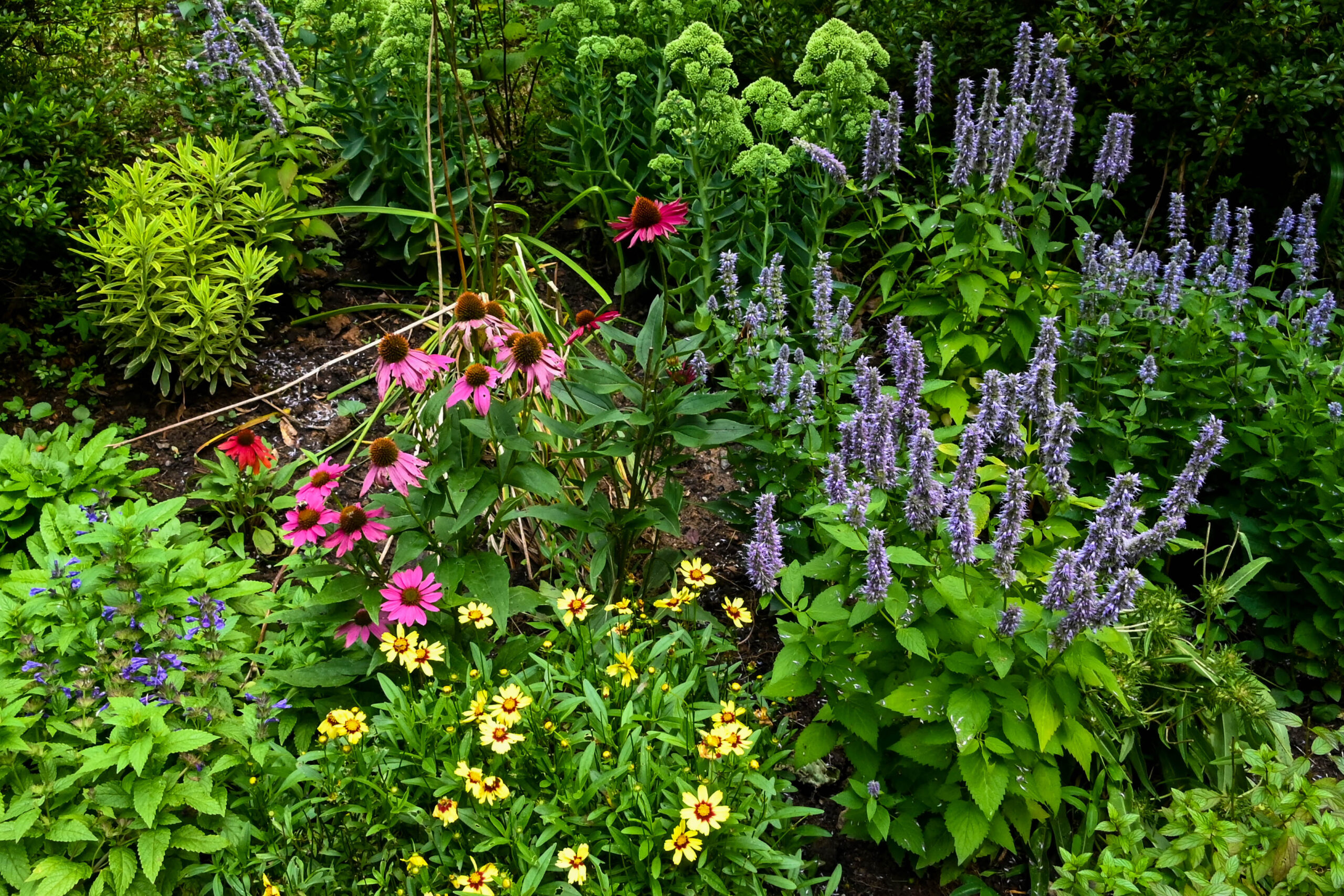
2. Eliminate INVASIVE plants. Nurseries offer them and landscapers choose them, but you should REFUSE them! Burning bush, English ivy, Chinese privet, bradford pear, nandina, barberry, butterfly bush, multiflora rose, Japanese spiraea, Japanese knotweed, and porcelain berry may LOOK pretty but support few or zero caterpillars and can quickly spread, unchecked, outcompeting native plants that have evolved alongside of pollinators and other wildlife.
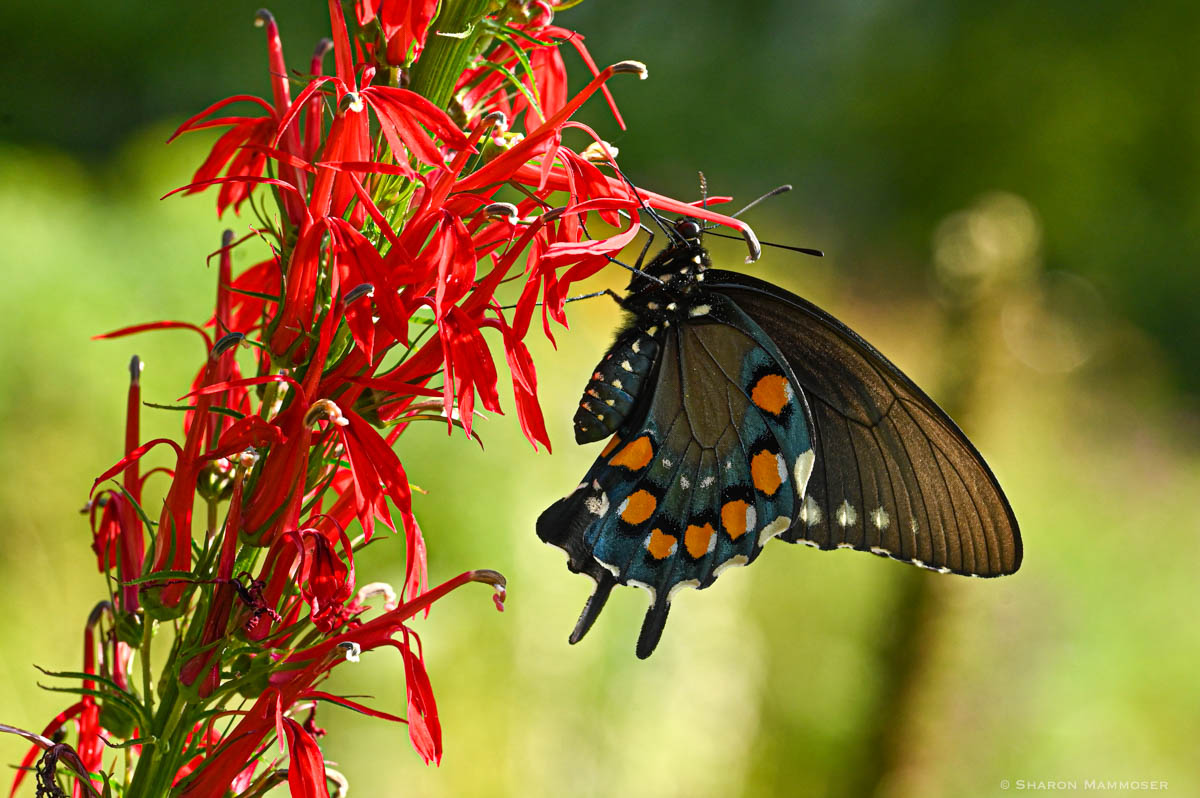
- Shrink your lawn by adding some “habitat islands” into your green space. Add in a tree or shrub along with some shade-loving plants that create “soft landings,” for caterpillars. Create a rock or brush pile. Pick a variety of plants with different shapes, colors, textures, heights and bloom times.
- Eliminate harmful pesticides and other chemicals. These kill the insects your habitat needs to thrive.
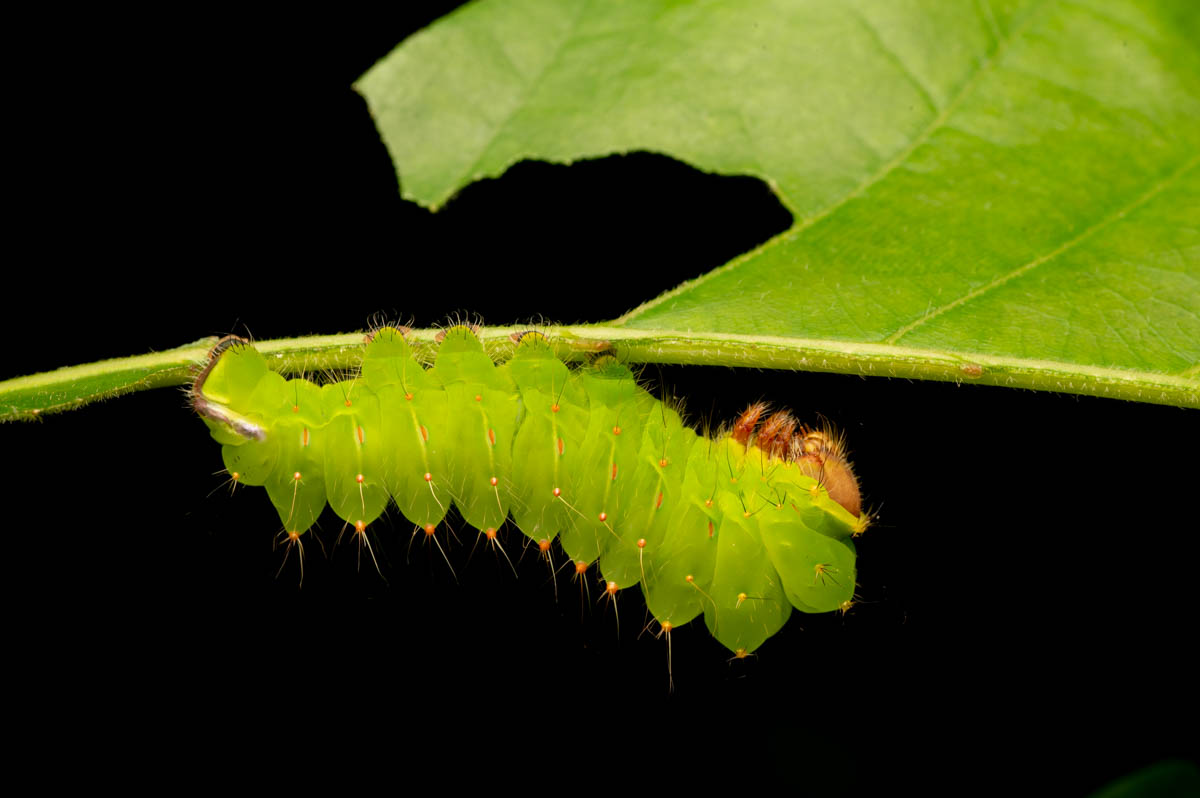
- Choose HOST plants for caterpillars. Some great ones are milkweed, goldenrod, aster, buttonbush, coneflower, spicebush, and passion vine. If you have room, the BEST plant you can add to your yard is an oak tree! Oak trees support a whopping 557 species of butterflies and moths! There are many species of native oaks—Find the one that’s right for you at HomeGrownNationalPark.org Another great choice is wild black cherry, which also supports a large number of insects.
- Offer water, such as a bird bath, fountain or small pond. Even insects like bees and wasps need water– you can help them by offering water in a shallow tray filled with small rocks.
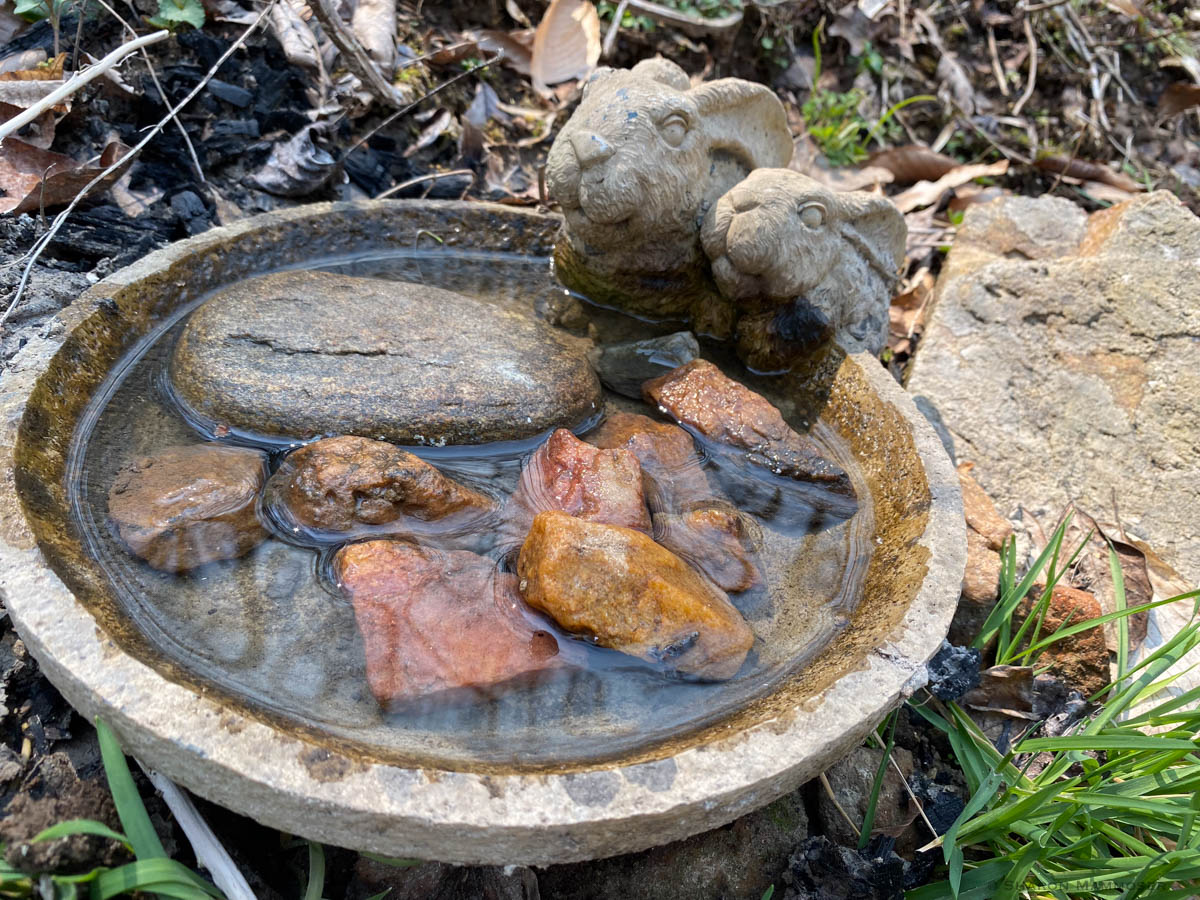
A shallow bath with rocks is perfect for bees and other insects.
- Turn off your outdoor lights at night. Animals like fireflies, bats, frogs and birds need darkness.
- Leave your leaves on the ground, as many critters need them for part of their lifecycle, including firefly larvae.
- When safe, leave dead trees standing, and/or offer nesting boxes for cavity-nesting birds like bluebirds and chickadees. Check out NestWatch.org for hole size and placement information.
- Allow, and even embrace, imperfection! Chewed leaves, caterpillar poop, or mud dauber pipes mean you’re on the right track. Congratulations, YOU are making a difference!
Great content! Keep up the good work!
Thanks! Glad you enjoyed it.
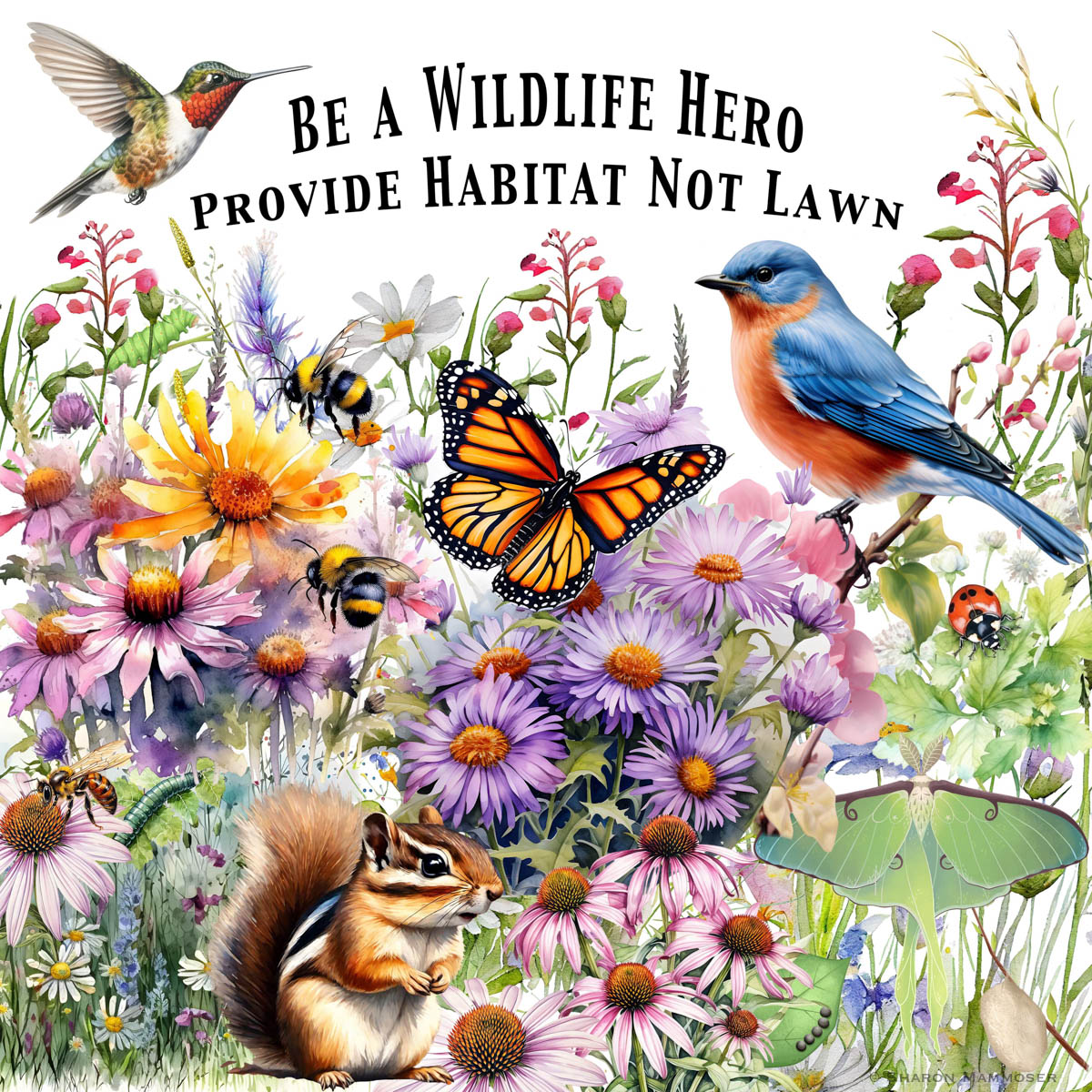
Terrific information but, just seemed to be jumping subjects a little too uncomfortably! I’m creating a Butterfly Habitat Project in the Chicago, Illinois area but, DID ENJOY YOUR STORY. I guess it was the BIRD information that threw me. Especially loved the CHIPMUNK rendering on your T-shirt design.
Hey Leslie, Thanks for taking time to comment. I think because I was given a word limit for the magazine, the article may not have flowed the way it could have and may have seemed a bit disjointed. I hope your butterfly habitat project goes well. That sounds interesting, and a great start for a lot of people to learn about butterflies. I hope to see you here again!