
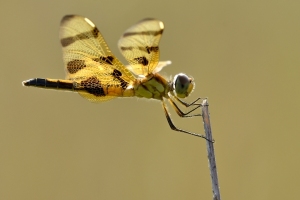
Odonata is the order that includes dragonflies and damselflies. Both start their lives in the water as eggs, and then develop into nymphs that live under water before transforming into winged adults. Dragonflies cannot close their wings and hold them out to the side, whereas most damselflies are smaller, and hold their wings over their bodies. In both the aquatic and adult stage, they are all fierce predators.
48 Photos
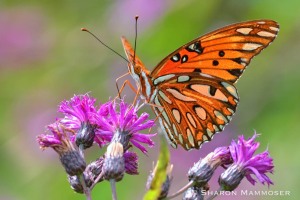
It's easy to like butterflies. They are colorful, peaceful and come in a variety of shapes, sizes and colors. In the United States there are approximately 750 different kinds... How many have you seen?
50 Photos
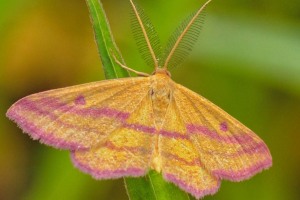
Moths and butterflies belong to the order called Lepidoptera. Did you know the moths outnumber the butterflies, 10 to 1? There are a LOT more moths than butterflies but most people don't know this because they're not out walking around in the dark. Most moths are nocturnal, but there are day-flying moths too.
122 Photos
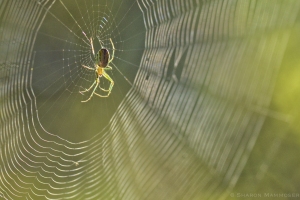
There are more than 37,000 named species of spiders though scientists estimate this is likely less than a quarter of the actual number. Spiders are incredibly diverse, featuring all kinds of amazing adaptations, colors, shapes, sizes and habits. Without having them dead in front of you, and the expertise of an Arachnologist, it's often difficult to identify them.
26 Photos
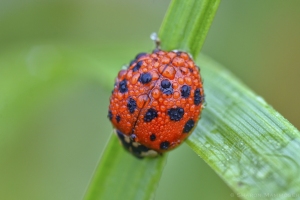
Insects are the most plentiful group of animals on the planet with more than 900 thousand. 900 THOUSAND!! Imagine the variety! Beetles make up the largest group with more than 300 thousand different species! For reference, that's more species of trees on the entire Earth. Here is a small sample.
45 Photos
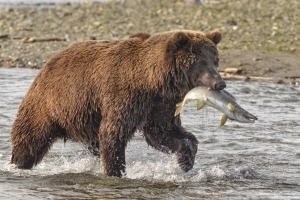
In the world, there are 6,495 species of mammals. North America is home to 457 species of mammals. One in every 4 mammals is a bat, with more than 1400 different kinds of bats. Which one is your favorite?
47 Photos
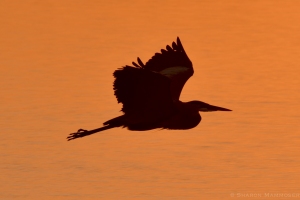
Our planet Earth is home to more than 10,000 species of birds, with over 900 species living in North America. How many have you seen?
78 Photos
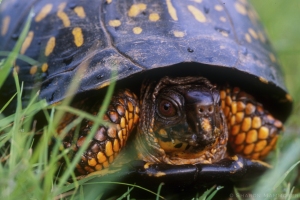
Turtles, snakes, crocodiles, lizards, salamanders, and frogs make up the orders of reptiles and amphibians, with more than 662 species of reptiles and 300 different kinds of amphibians.
34 Photos
I am, above all else, a lover of all things wild, but admit that when it comes to photography, my favorite subjects are what I call “small wonders,” which are in my mind those insects and invertebrates that many discount.
I am addicted to macro (closeup) photography and on many summer mornings can be found crawling around unnamed meadows where I live. It’s a sure way for me to lose all track of time. There is just something so amazing about discovering these creatures and capturing them with my camera in order to share them with the world. The variety is breathtaking, from beautiful, to fierce, to shiny, tiny, spiky, smooth, dazzling, and everything in between. The more I have learned about them, the more I want to know. I think more people would appreciate insects, spiders and other invertebrates if they knew what incredible adaptations they have and how beautiful they can be, especially when covered with tiny drops of dew.
I feel strongly in not harming the creatures–large and small–that I photograph. There are some who will, as they say, “borrow” insects such as butterflies, from nature and put them in the freezer so they can photograph them more easily. If the creature is frozen it doesn’t move. But this way of getting an image is not for me. I don’t believe in putting animals in jeopardy for the sake of a photo. Same is true of the large animals I have photos of– I didn’t pay money to photograph captive animals at game farms or other caged spaces. The animals you see in my galleries were not from “model shoots.” I don’t believe in stealing animals from the wild so they can be fenced or caged for the benefit of humans. Wild animals should be wild. Always.
My favorite macro subject is spider webs and the dew that hangs like pearls on the silken strands. But I love the wonder of the other small creatures too– the insects most people never see and don’t know the names of. Butterflies and dragonflies may come to mind first, but there are many others, including many that I can’t identify right away and will look up later, in my office. It is in this way that I learn about the animals I encounter.
A funny story: Once I was doing a program on animal adaptations for a group of pre-schoolers and started out with an image of a grasshopper on the ground amid gray rocks. The grasshopper blended in perfectly, making it difficult to find. I asked the group if they could find the hidden animal in the photo. There was silence as they all studied it. Then, after none of the kids raised their hands, I used my laser beam to point out the grasshopper. One of the teachers in the room exclaimed, “Well that’s not an animal!” It seems that many people, children and adults alike, do not recognize grasshoppers, spiders, butterflies and other insects as animals. But they indeed are animals. With my photography and my blog I strive to educate about these Small Wonders that are our insects, spiders, and other invertebrates.
I hope you enjoy looking at these animal photos here and even better, I hope you go outside and look for them there. They are indeed everywhere. You just have to have the eyes to see.