

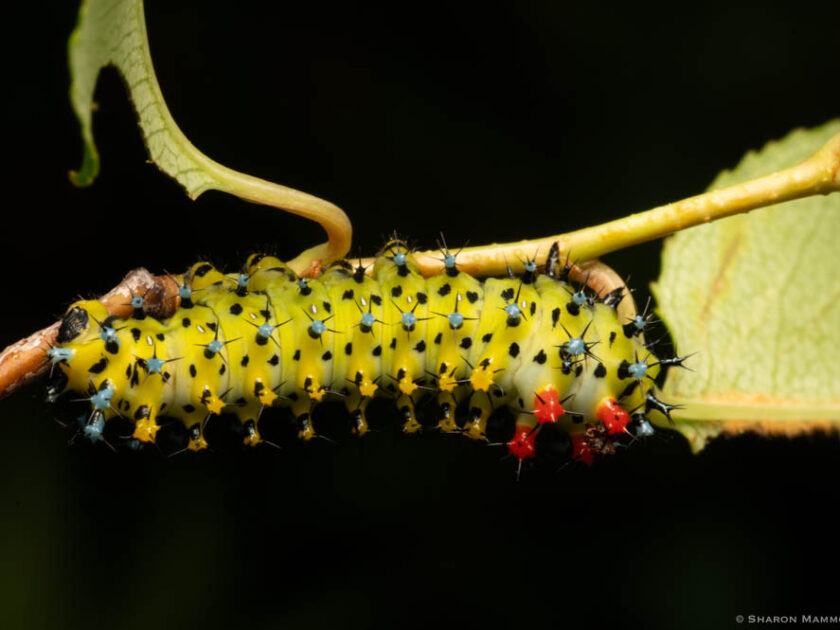
Special thanks to Beth for sharing these amazing caterpillars with me so I can photograph and watch them grow! I love it! Thank you!
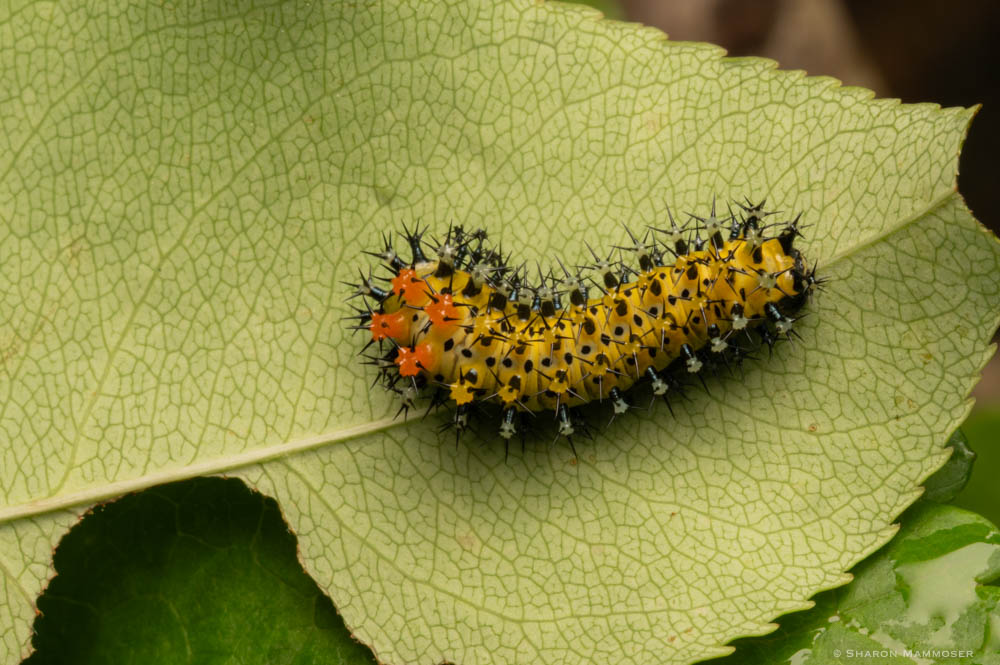
I recently wrote a post about a new song I’m enjoying, called How Beautiful This Life is, talking about Wonders and Surprises by an artist called Berre. I was thinking about the title of this song today as I watched one of the caterpillars I’m raising chowing down on a black cherry leaf. These inch-long eating machines (pictured above) look like something from a science fiction movie, with a yellowish-green body sporting red, yellow, and blue spine-covered projections in regular intervals. It shouts without words, “Don’t touch me!” and to many birds, these barbs may serve as an effective deterrent. Even describing it sounds like I must be making this up. It’s wild. This caterpillar will eventually become one of the most colorful and largest of our silk moths– a Cecropia moth with a wingspan of 5-7 inches. That’s as large as our day-flying tiger swallowtail butterfly but how many people have ever had the privilege of seeing one? I would guess not very many. Not because they are rare, but because they are nocturnal, flying around when most of us are sound asleep in our beds, away from the forest and its myriad of secrets. I have no photos of an adult because I have never seen one! And that’s saying a lot because I am out often at night, and spend lots of time looking for and attracting moths to my yard!
Cecropia moth caterpillars feed on a variety of leaves from deciduous trees including maple, cherry, birch, and apple. Once they get started on one kind of tree leaf, they prefer to stick with that one. Amazingly cecropia caterpillars will gain more than a thousand times their weight between when they hatch from their egg to the time they spin their cocoon. Imagine! 1000 times its weight in only a few short weeks. Nature is full of astonishing everyday miracles like this, but most of us never know about them. We live on a planet full of wonders and surprises!
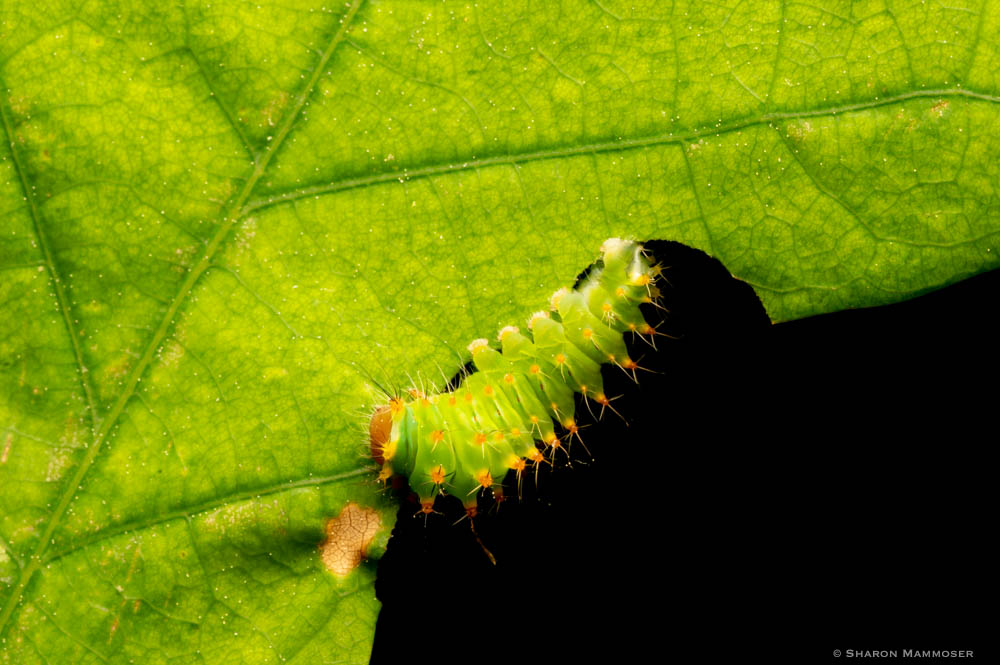
I’m also raising a handful of polyphemus moth caterpillars. These are green, fat caterpillars that can be 3-4 inches long with orange dots along their bodies, some sporting spikey hairs that look like mini swords. Unlike some caterpillars such as io moth caterpillars, polyphemus caterpillars do not sting and are harmless to handle–though of course if you’re a bird looking for a tasty morsel to feed your babies, these scary-looking spikes might keep you away! When resting, they often hold their head and 6 legs in an upright position, remaining motionless so as to avoid detection. According to Wikipedia, these caterpillars can “eat a total of 86,000 times its weight in the first eight weeks after emerging from their eggs.” I mean, wow, who wouldn’t be amazed by this number! Imagine.
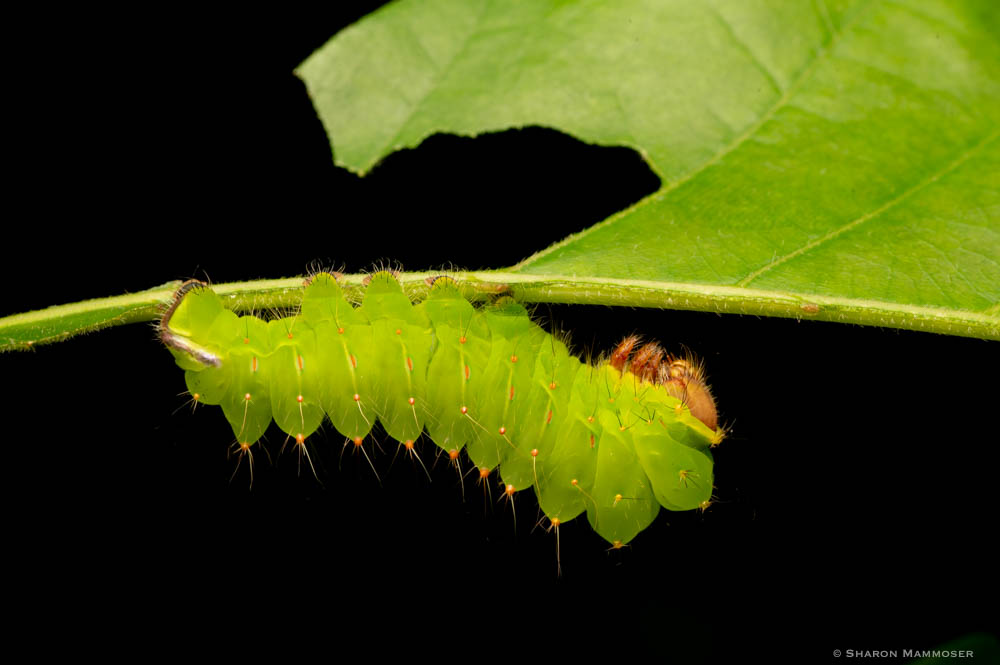
These are feeding on oak leaves, though they will also eat birch, elm, maple, hickory, willow, and alder. Since I live in a forest full of towering oak trees, these are what I offer the growing caterpillars. I have them in a container in my sunroom and would you believe that I can actually hear them munching on leaves? If a visitor was sitting in my sunroom and didn’t know about the captive caterpillars, s/he might think the walls of my home were being ravaged by termites! Crunch, crunch, crunch, like some invisible invader is chowing down on potato chips! This delights me, and also, makes me shake my head in wonder when I think of all of the ones like this out in the wild, feeding on leaves in the forest canopy, hidden and out of sight, though our songbirds are masters at finding these tasty treats, needing them to raise their growing broods of babies in nests stashed in trees, shrubs and even on the ground.
Did you know 96% of our beloved songbirds, like bluebirds, chickadees, catbirds, and brown thrashers REQUIRE insects, and especially, caterpillars when feeding their chicks?
One chickadee family needs between 4000-6000 insects, especially caterpillars, to raise their brood of five babies. A yard full of oak, maple, and other native plants is a haven for not only caterpillars, but also for the birds and other animals that eat them. Yards FREE of pesticides and FULL of native plants like oak offer so much to our native wildlife, including these incredible moths.
If you’re going to plant one tree in your yard, make it an OAK, as these support the most insects.
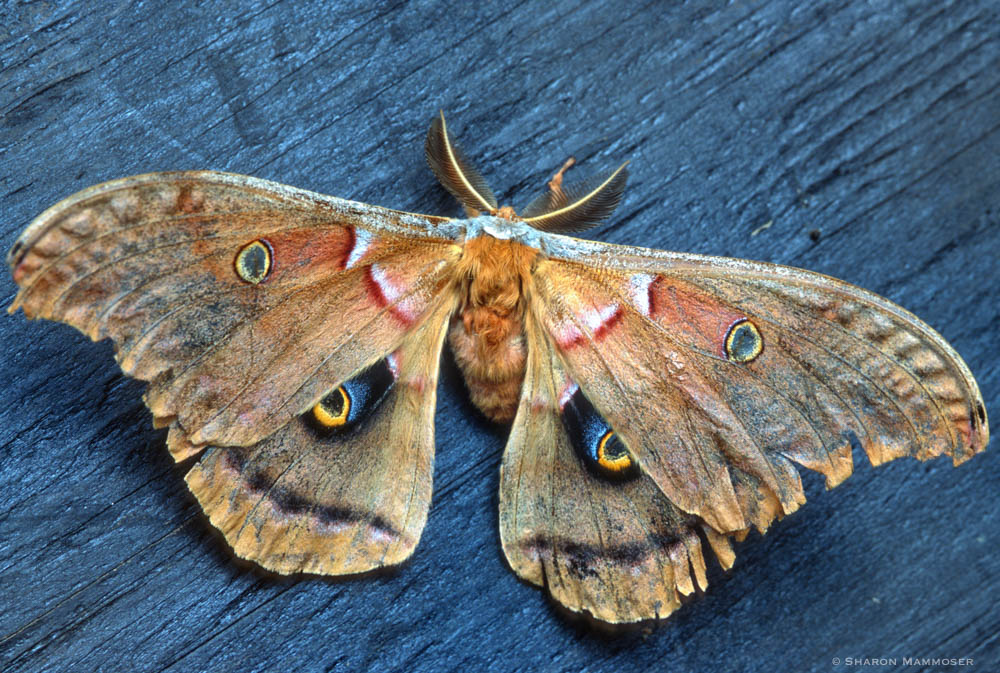
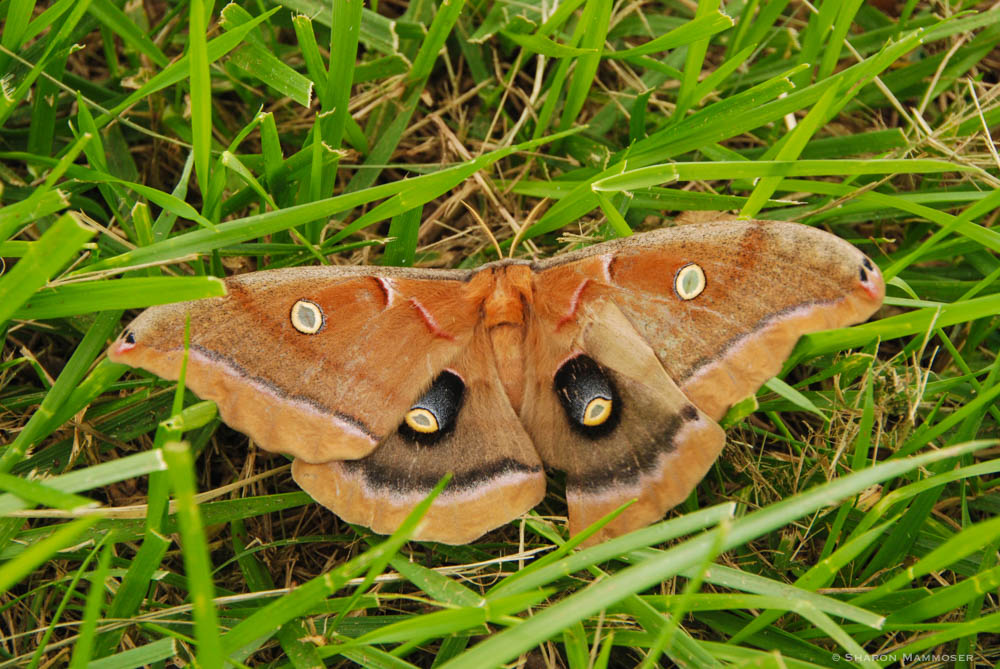
Polyphemus and cecropia moths do not feed as adults! Like the blue ghost fireflies I was telling strangers about only weeks ago, these moths exist only for one purpose– to mate, and if female, to lay eggs. As adults they live less than ONE WEEK! Yikes, talk about a short life. This fact likely adds to the reason why most of us have never seen these moths.
Polyphemus moths will mate on the same day they emerge from their cocoons. My friend Beth told me a great story recently about a polyphemus moth that she had raised from an egg. After eclosing from their cocoons, the adult moths will hang out for a while, waiting until the cover of darkness to try out their wings for the first time. Beth had her moth in a mesh enclosure and took the whole cage outside to put on her porch until evening when she could safely release it. Later when she went outside to check on it, there were 7-10 large moths flying around the porch! Know why? Because the moth in the enclosure was female and she was pumping out invisible pheromones (perfumes) to call in the boys! Studies show that some of these large silk moths can draw in moths from several miles away!! They smell them with their feathery antennae. They will mate for under an hour to up to several hours. Then the female will lay eggs, from 200-350, usually singly or in small groups on the underside of their host plant’ s leaves. And the cycle will begin again. Need I say it? We live on a Planet full of wonders and surprises!
If you want to help these amazing creatures, there are a few things you can do:
- Leave your outdoor lights off. Since many of these moths live only a week, it’s heartbreaking to realize many get “trapped” in artificial lights that humans leave on all night. When this happens these moths bat around and around and around, wasting energy and time. They won’t find mates, and often die before they can mate and lay eggs. There is no reason why humans need to light up the night! Let’s start acting for the good of the Planet and consider the needs of moths and other animals. Put your lights on a motion sensor instead.
- Stop using pesticides, herbicides, and other poisons in your yards. This includes hiring companies like Chemlawn that spray your yard with poisons. These have many, many, many unintended consequences, including causing cancer in some dogs. There are so many things that are more important than a perfect green lawn.
- Don’t hire mosquito trucks that come in and kill every insects and invertebrate. Our birds NEED insects! And these mosquito services kill everything, no matter what they try to tell you. There’s a better way to get rid of mosquitoes and more environmentally friendly solutions.
- Accept some imperfections in your yards and gardens. Chewed leaves are a sign of a healthy, functioning ecosystem. Celebrate them, as it means you are helping rather than hurting.
- Create habitat. Fill your yard with native plants and shrink your lawn. Shrink your lawn. Shrink your lawn. SHRINK YOUR LAWN! Lawns are outdated practices that create a vast monoculture that HELPS NO ANIMALS. We are smarter than that! This is 2026, not 1950. We know better now. Let’s stop wasting precious time, resources and money on creating a perfect green lawn. Instead of wasting every weekend mowing large patches of perfect lawn, why not have more habitat than lawn and use the time to read a book, have a cold beverage or take a walk? Let’s stop valuing a perfect lawn and start valuing habitat that supports a variety of wildlife!
- Leave the leaves! Many animals, including fireflies and many species of moths REQUIRE leaves for part of their lifecycle. When we take away the leaves, or chop them into thousands of tiny pieces, we are essentially killing every single living thing that needs those leaves. Again, let’s stop with the outdated practices. Instead of raking or blowing all of your leaves into giant piles to be carted away, why not sit back, put your feet up, and have a beer with a few friends?
- Tell everyone you know! Then tell them again! These things won’t change unless we speak up and spread the word. I know you’ll help me!
Here’s some more wonder and surprises…
A mama deer and her newborn fawn.
More than a million wrinkle-lipped bats returning to their cave!
An io moth caterpillar, and then the adult.A stunning moth you have to see to believe.
An incredible creature called a railroad worm– this glows in the dark!! Everyone should get to see this at least once in their lifetime!!
A mama bear with her VERY TINY cubs!If this doesn’t make you smile, nothing will!
A monarch eclosing from its chrysalis!
Which one is your favorite? There are so many! An infinite number, every single day, no matter where you live.
What wonders and surprises have you discovered lately? I’d love to hear! Please use the reply box below.