

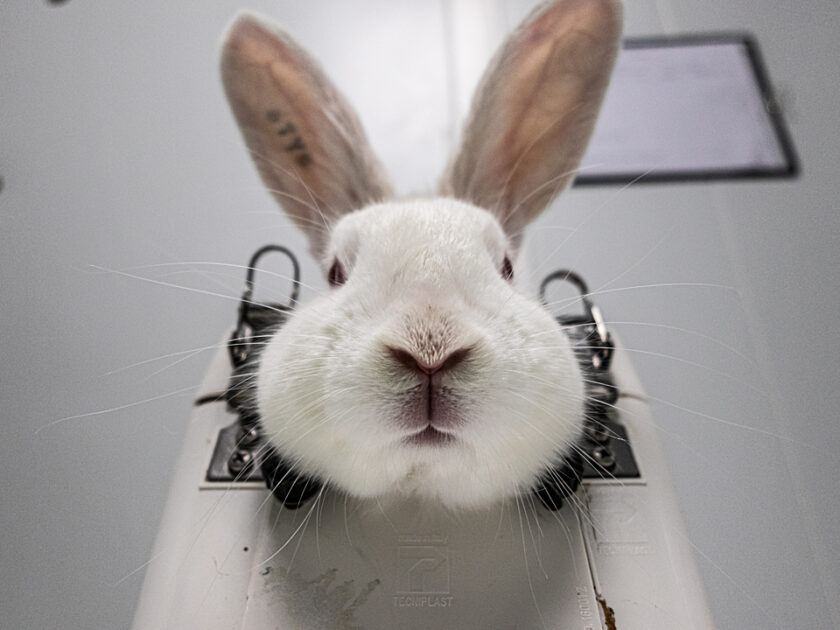
At this moment, millions of animals including dogs, cats, rabbits, rats, birds, monkeys, and mice are locked way in cages where they will spend their entire lives. Can you imagine spending your entire life in a tiny cage? What gives us the right to subject animals to this cruel torture? They might be forced to breathe or eat toxic chemicals, or have chemicals forced into their eyes. At Universities across the country animals suffer unimaginable circumstances. “They tear baby monkeys away from their mothers, sew kittens’ eyes shut, mutilate owls’ brains, puncture the intestines of mice so that feces leak into their stomachs, and terrorize songbirds with the sounds of predators. At the end of experiments like these—which consume billions in taxpayer funds and charitable donations each year—almost all the animals are killed.” What?! I had no idea!
Many of us donate money to organization we think have the potential to help or find cures for some of our most deadly diseases. Organizations like St. Jude Children’s Research Hospital, Susan G. Komen, March of Dimes, and the Muscular Dystrophy Association, But did you know these organizations funnel donations toward appallingly cruel and pointless experiments on animals? Is this how you want to spend your money?
According to the World Animal Foundation:
- Over 110 million animals are used in experiments every year globally.
- Over 90% of items tested on animals fail human clinical trials.
- It takes 12,000 animals and 50 different experiments to pass just one single pesticide.
- Some experiments on animals include impregnating females just to run tests on their fetuses.
- Animal Welfare Act (AWA) offers minimal protection when it comes to animal labs using mice, rats, hamsters, birds, reptiles, amphibians, and other animals for their experiments.
World Animal Foundation says, “Excluding species research, there are two core areas where animal testing and animal research occur:
- Cosmetics testing: The cosmetic industry often performs animal experiments on a range of animals to ensure their make-up products will not cause any adverse reactions when they hit the market.
- Drug testing: Animal testing for pharmaceuticals often happens before human clinical trials begin. Animals in laboratories are kept in barren cages and experience extreme distress.”
44 countries banned animal testing for cosmetics but the US and China continue to torture millions of rabbits, mice, rats and other animals every year. The animal are locked away in cages, forced to endure poking, prodding, and inhumane treatment before they are ultimately killed and discarded, like an inanimate product instead of a living, breathing, sentient animal.
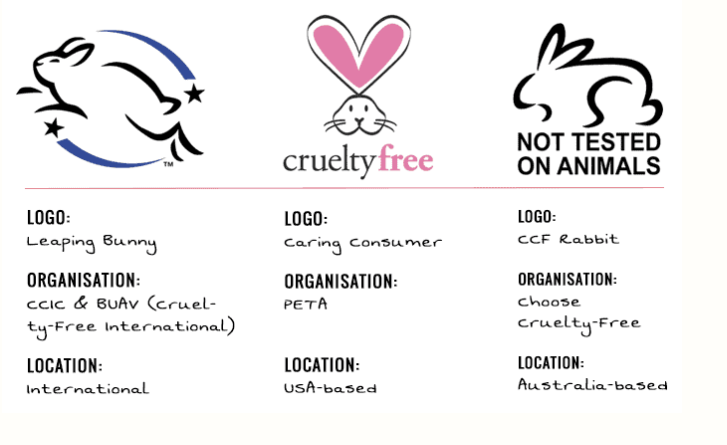
You can choose not to participate in this, and refuse to support this cruelty. Research who you give money to, and stop buying products that have been tested on animals. If you’re still buying these products, you are supporting this cruelty. Make a change today! Products will have a rabbit if they are cruelty-free– but be warned, sometimes companies invent a fake logo and stick it on their product, deceiving customers into thinking it is cruelty-free when it really isn’t. Here are three symbols you can trust:
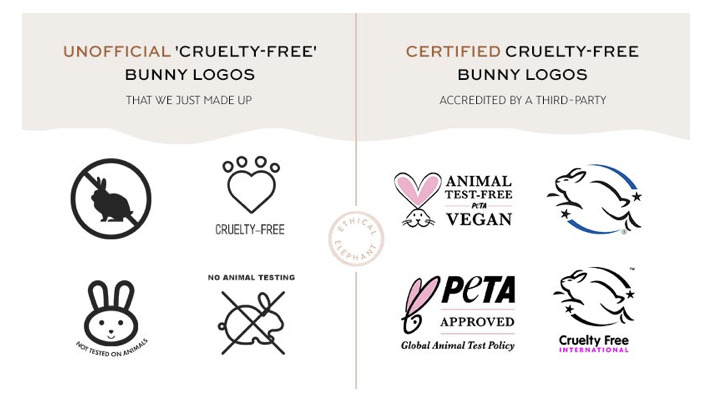
According to Ethical Elephant.com, “Some of us aren’t down for printing a list and bringing it to the store, so thankfully, there’s an app for that! Download a cruelty-free mobile app where you can quickly scan a product’s barcode and instantly know whether it’s tested on animals or not.” Talk about an easy button.
Here’s how you can shop cruelty-free.