Halloween is just a few days away… so here’s a post about a spider that’s a newcomer to our area in western NC.
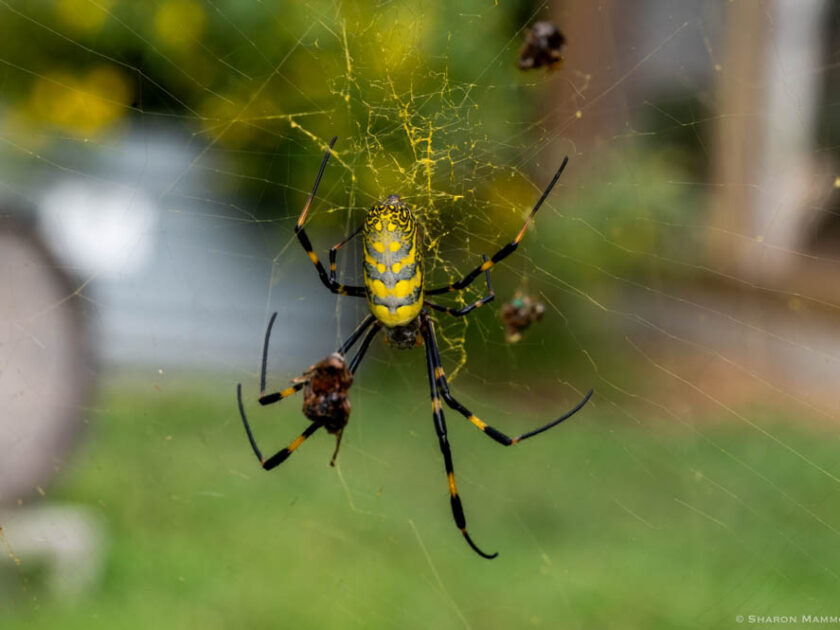
Two summers ago I was visiting my friend Kim, at her farm, Milkweed Meadows in Fruitland, NC and saw a giant yellow and black spider with a web made of golden silk that stretched across a super wide space, with lots of strands of silk creating an extra bunch of possible traps for unsuspecting insects. It was my first time ever seeing a jojo spider (Trichonephila clavata)— though I’d read about this spider because it’s invasive and initially people were being advised to kill them if you saw one. I remember thinking that I hoped this spider would never find its way north to my property, as it was very different from the “typical” orb-weaving spiders I was used to seeing.
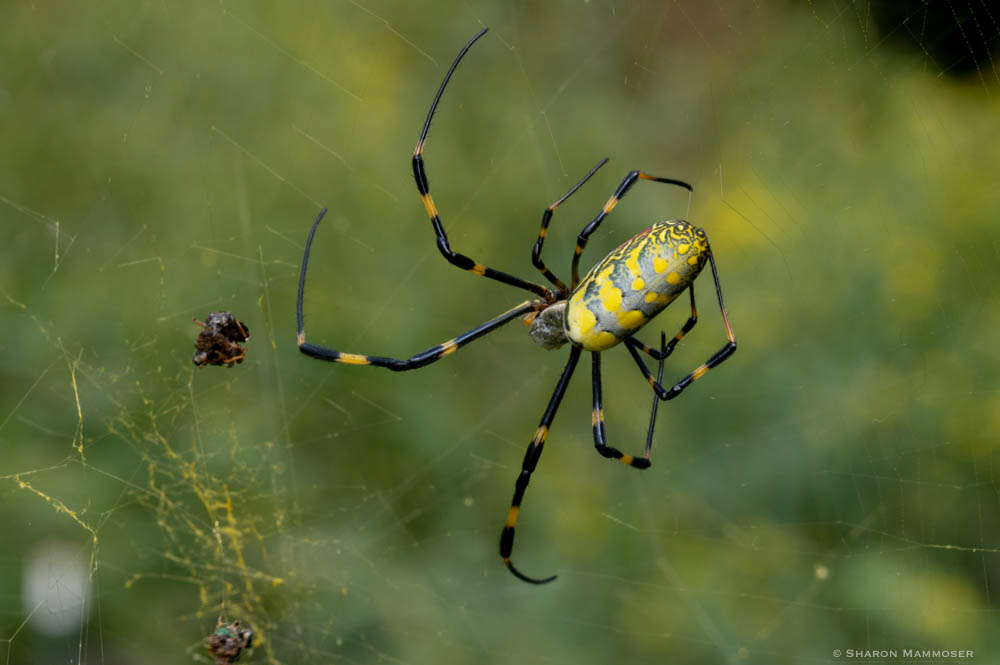
Joro spider in a golden web.
Fast forward two summers–and now, this spider seems to be everywhere on my 17 acre wooded property. I was shocked this summer when I kept finding it again and again, not just one or two, but MANY! They were in the garden, along the driveway, around the pond, and in the forest behind my house. Have you also seen it near you? Wondering where it came from and what to make of it? You’re definitely not alone! This spider and its very messy and large web is impossible to miss.
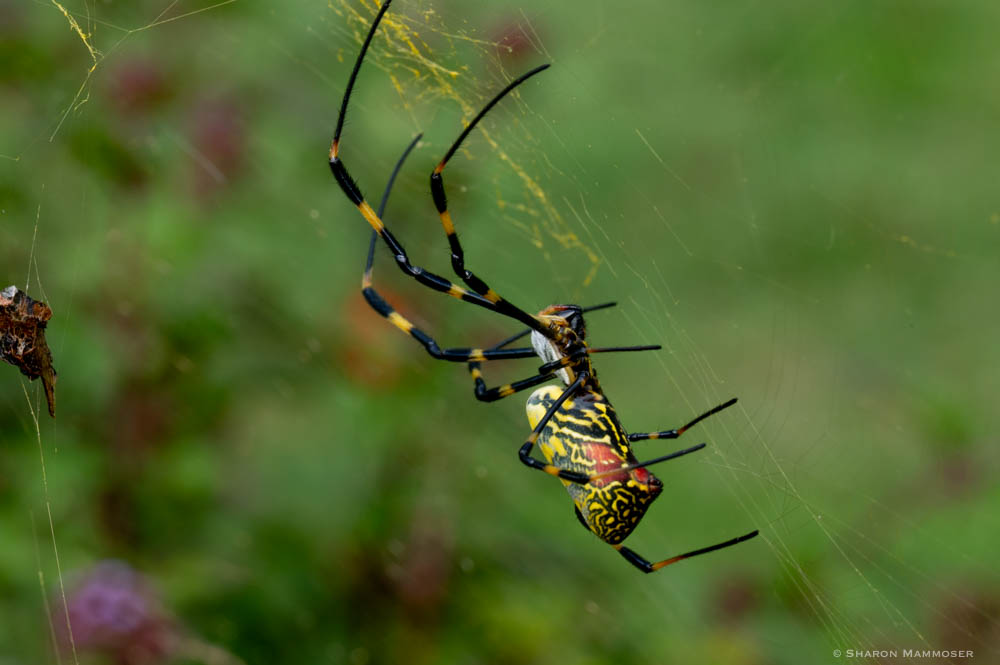
Joro spider with red on its side, and yellow and black striped legs.
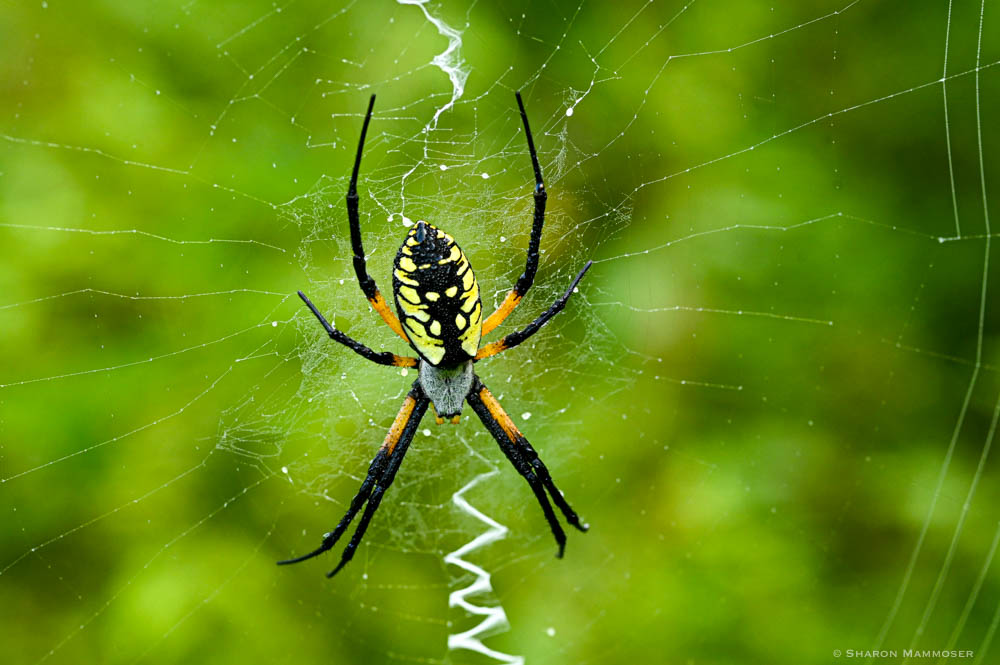
Joro spiders are not from here. They can be found throughout Japan, Korea, Taiwan, and China. In the last few years they have appeared in the southern United States, first in Georgia in 2014, and, more recently, in South and North Carolina and 10 other states. They are steadily radiating out from the Atlanta area where they were first discovered and many people are panicking. But do we need to panic about this spider? The answer is no. And these days experts are not suggesting people kill them when they see them, as like it or not, these spiders are here to stay, and in the whole scheme of things, they are not going to cause millions of dollars of crop damage like other non-native critters who show up, such as the spotted lantern fly. Experts aren’t sure what impact they will have on our native wildlife, but there are people looking into it. They want to know if our native birds will learn to eat these spiders, and how our native spiders, like our common yellow and black garden spiders (pictured below) may be affected. (You can help by submitting photos of these spiders and their location to INaturalist)
Our native garden spider.
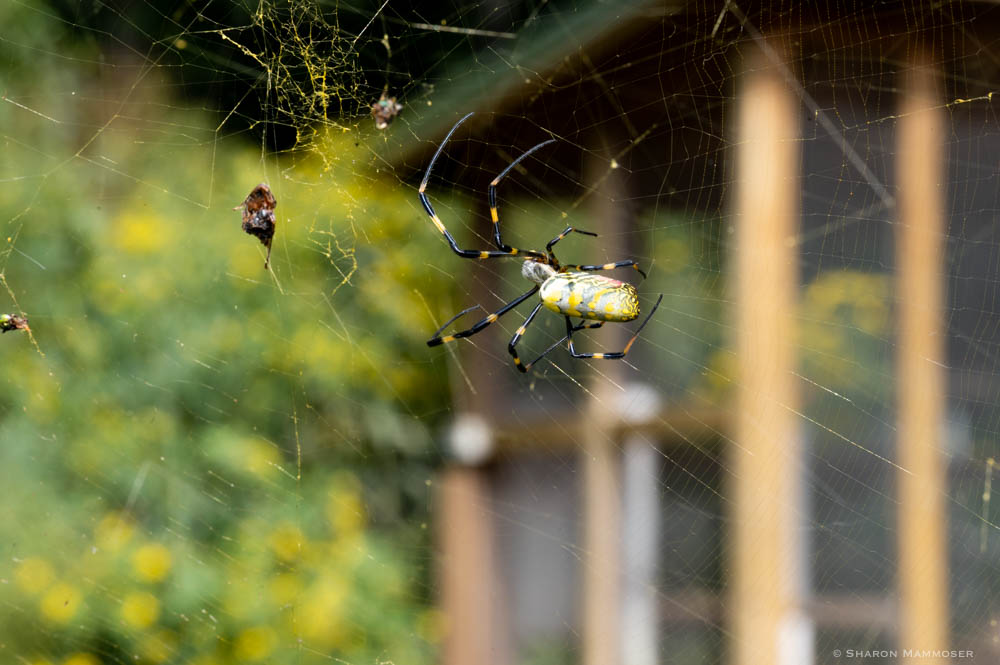
Female joro spiders can can grow up to 1 inch in body length and have a leg span of up to 4 inches. They are brightly striped in blue-black and yellow, and have a distinctive red marking on their underside. Males are only 1/3 of the size of females, measuring about 0.3 inches in body length. When you find a female’s web, you often see several competing males in the same vicinity, in smaller webs, and they are shockingly small beside the female. Spiders in their genus, Trichonephila, create one of the strongest kinds of silk in the animal kingdom, and their silk is distinctive because when the sunlight hits it, it appears golden–something unique and spectacular, and definitely worth noting.
Despite their intimidating size, joro spiders are shy and won’t bite humans unless you work REALLY HARD at it, pressing them roughly while against your skin so they fear for their life. No reasonable person is going to do this!
a female joro spider in her web.
They would much rather retreat to an out-of-the-way location on the side of their web, preferring to be non-confrontational and wait it out. This means they make a perfect observational opportunity as once they set up shop, they will remain there all the way from spring when they hatch out of their egg sacs, through late fall. If you have kids or are like me–a curious adult– then you can really get up close and personal with them, watching what they eat and noticing their habits.
What DO they eat? Like other web-building spiders, they eat anything that stumbles or flies into their web–mostly insects, although some evidence suggests their webs are strong enough to catch small birds.
Wonder how they moved north so fast? Baby spiders, called spiderlings, disperse by way of something called ballooning. This really is pretty much what it sounds like–the newly hatched spiderlings climb up a branch or plant, turn their abdomen towards the sky and then release a thread of silk into the air. When the wind catches the extended silk, the tiny spiderling gets lifted off into the sky and he or she flies, flies, flies! Until the wind stops and the spiderling falls to begin its life, wherever the wind may have taken him or her. Sometimes these tiny spiders can travel many miles, all on the whim of the wind. Other species of spiders do this same thing.
So yes, these spiders are large and frightening to people who fear spiders, but maybe you can help me set the record straight– we don’t need to fear these spiders. Instead, we can appreciate their amazing golden silk webs and use it as an opportunity to get up close and personal. Maybe this is the spider that will finally help you overcome your fear of spiders since they are so shy and easy to approach.