
Did you know fall is a great time for planting? Getting new plants in the ground, or rearranging plants you already have can be done now in preparation for next spring and summer. Plants will have many months to spread their roots and establish themselves, giving them a head start.
You’ve probably heard that invasive plants should be avoided. Invasive plants can quickly spread, and out-compete other plants, including our valued natives. This means less biodiversity, which impacts us all. We think the plants we buy are going to stay in our own yards, right where we put them, but gardeners everywhere are discovering that just isn’t true. The wind, birds, and other animals spread the seeds, causing these plants to pop up in the most unlikely places, including neighbor’s yards, and nearby wild areas.
Being a good neighbor means choosing plants that benefit the local wildlife AND that won’t escape into nearby habitats, including your neighbor’s yard.
If you have any of these invasive plants in your yard, maybe now is the time to pull them out and replace them with something native.
Here are some suggestions for what to replace your invasive plants with:
Burning Bush and Japanese Knotweed. (Both of these seed prolifically, quickly forcing out other plants and threatening biodiversity. These shrubs create large monotypic stands, forming massive root systems that don’t allow other plants space.)
Replacements:
- Ninebark (Physocarpus opulifolius)
- Dwarf Bush Honeysuckle (Diervilla lonicera)
- Fothergilla major ‘Mount Airy’
- Red Chokeberry (Aronia arbutifolia) or Black Chokeberry (Aronia melanocarpa)
- Serviceberry (Amelanchier alnifolia)
- Winterberry (Ilex verticillata)
- Clethra (Clethra alnifolia)
- Virginia Sweetspire (Itea virginica)
Heavenly Bamboo, Nandina (Originally from Asia, these shrubs have gorgeous red berries that look like they’d be great for birds. However, the berries contain cyanide, which can poison, sicken and even KILL birds who dine on the berries. )
Replacements:
- American beautyberry (Callicarpa Americana)
- Carolina Allspice (Calycanthus floridus)
- Buttonbush (Cephalantus occidentalis)
- Summersweet (Clethra alnifolia)
- American Strawberry Bush (Euonymus americanus)
- Shrubby St. John’s Wort (Hypericum prolificum)
Butterfly Bush, Buddleja. (Native to China, and sold at just about every nursery, this gorgeous shrub does attract a lot of butterflies, but does more harm than good. One flower spike may contain 40,000 seeds! These seeds travel far distances by way of water, or wind. It has an 80% germination rate, and the seeds remain viable for 3-5 years. Unlike many of our native shrubs and other plants, NOT ONE butterfly or moth feeds on the leaves of this plant. These plants are difficult to manage once established. )
Replacements:
- Bottlebrush Buckeye (Aesculus parviflora)
- Lead Plant (Amorpha canescens)
- Buttonbush (Cephalantus occidentalis)
- Summersweet, also called Sweet Pepperbush (Clethra alnifolia)
- New Jersey Tea (Ceanothus americanus)
- White Meadowsweet (Spiraea alba)
- Virginia Sweetspire (Itea virginica)
Bradford Pear and Callery Pear (These trees may be beautiful in the spring, but wow, they can wreak havoc on an ecosystem in a short period of time! In addition they smell bad, have weak branches that easily break under harsh weather conditions and do not provide benefits to our local wildlife)
Replacements:
- Flowering Dogwood (Cornus florida)
- Black Cherry (Prunus serotina)
- Serviceberry (Amelanchier arborea)
- Redbud (Cercis canadensis)
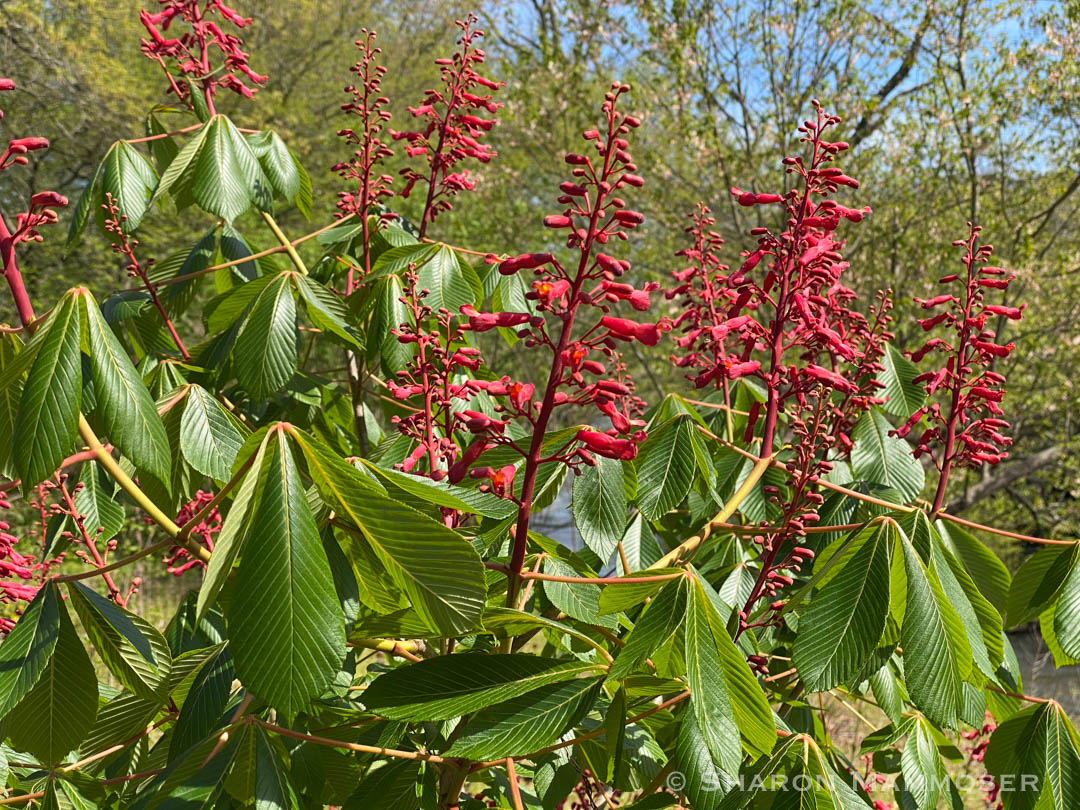
- Red Buckeye (Aeschylus pavia)
- Fringe Tree (Chionanthus virginicus)
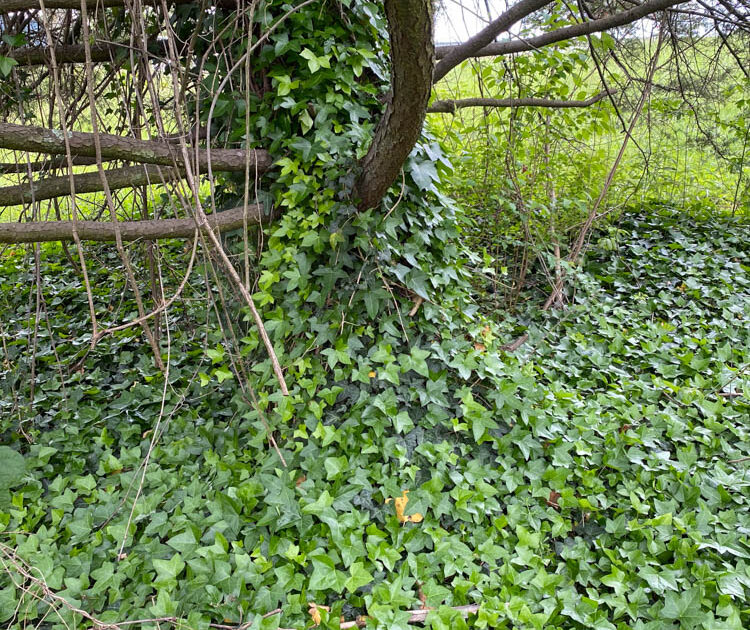
English Ivy, Hedera helix (This vine easily takes over an area, and then escapes into nearby wild areas and yards, strangling native trees, shrubs, ferns, flowers, and other plants. Give this vine a hard pass!)
Replacements:
- Virginia Creeper (Parthenocissus quinquefolia)
- Green and Gold (Chrysogonum virginianum)
- Blue Phlox (Phlox divaricata)
- American Wintergreen (Gaultheria procumbens)
- Bearberry (Arctostaphylos uva-ursi)
- Christmas Fern (Polystichum acrostichoides)
- Climbing Hydrangea (Hydrangea petiolaris )
- Crossvine (Bignonia capreolata )
Privet, Ligustrum japonicum (This invasive plant can out-compete just about any other plant in a short amount of time. Both Japanese privet and Chinese privet form dense thickets that are just about impossible to remove once established.)
- Winterberry (Ilex verticillata) This is a deciduous holly.
- Evergreen hollies (various species)
- Mountain laurel (Kalmia latifolia)
- Azaleas (various species)
Hope this helps! Start slow and remember to take baby steps. Getting rid of invasives in your yard takes patience, hard work and the determination to make a difference. Don’t give up!
Thank you for all of the information on invasive plants etc. I will be removing the only Bradford Pear planted in 1986 due to invasive statis and already fragile branches.
Hey Joel, Happy to hear it! Thanks for caring, for reading, and for taking time to write. Hope your day is going well!