

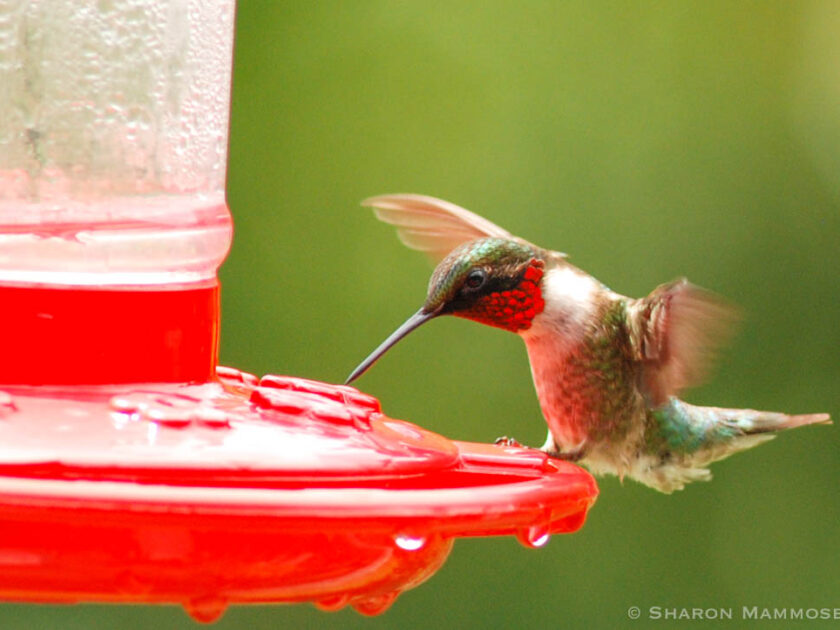
What’s not to love about hummingbirds? These tiny flying jewels bring me and so many others such joy. Seeing them in my yard enjoying the flowers I’ve offered them, or watching them at my feeders (What?! 7 at one time!) is a pleasure I never tire of.

What kind of hummingbird is visiting my feeder? Answer: This one is easy to answer only if you live EAST of the Great Plains. That’s because in the east, like where I live in western NC, we only have ONE species of hummingbird–the ruby-throated hummingbird. On the other side of the county, it’s a lot more difficult, as there are multiple species that will visit the feeders and flowers. A reader on the west coast recently wrote to me and I learned that where she lives in California, she can have 14 different species! There are more than 125 species in Ecuador! If you want help identifying birds, including hummingbirds, I recommend the Sibley guides –East and West depending on where you live.
How can I attract more hummingbirds to my yard? Answer: Simple, create more habitat. Birds, including our beloved hummingbirds, need a variety of things, none of which is green lawn. They need nesting places, hiding places, nectar sources, and lots of tiny insects to eat. They need spider web silk for their nests–so of course spiders are essential. So many people have a yard devoid of life, with nothing to offer but green grass and then wonder why they don’t get any hummingbirds at their feeder. A perfect green lawn does not attract much of anything, and definitely not hummingbirds. So, add more native flowers, shrubs, trees, grasses, and vines, to your yard. Stop killing all of the insects with pesticides. Accept imperfection. Keep your cat inside. Add a hummingbird fountain. Then maybe you’ll start to see more hummingbirds.
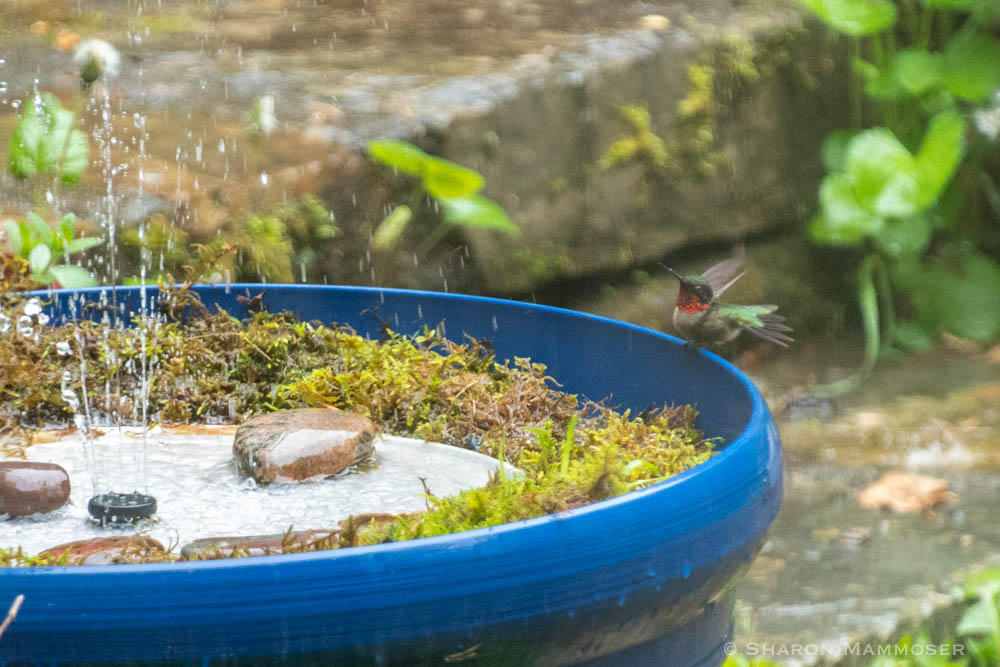
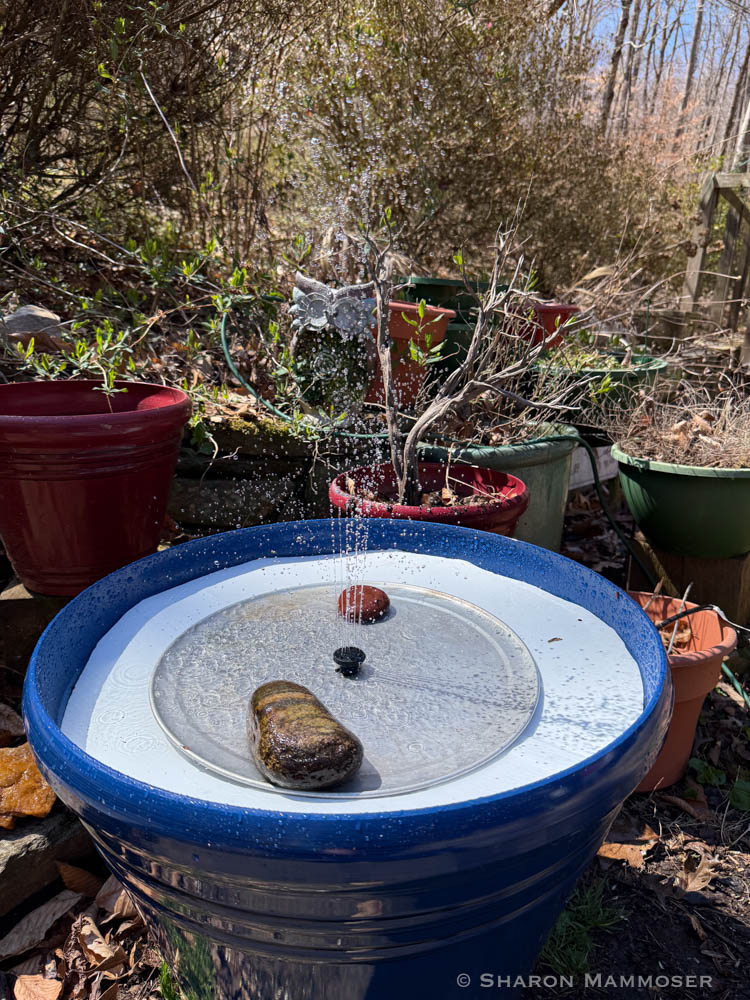
I’ve seen your videos on Instagram of multiple hummingbirds at your feeders at once. How do you get so many? Answer: My wooded yard is a wildlife paradise, filled with mostly native plants, including MANY that the hummingbirds love. It is a safe haven for all wildlife. I don’t use pesticides. I don’t have lawn. I don’t rake my leaves. I leave my outdoor lights off at night. I don’t allow my two cats or my dog to roam freely outside. There are many, many safe place for these tiny birds to perch and nest. I even made a fountain for them since they enjoy mist or a gentle spray of water. In addition to all of the native flowers, I have many hummingbird feeders that I offer the birds– Last count was 10 feeders!
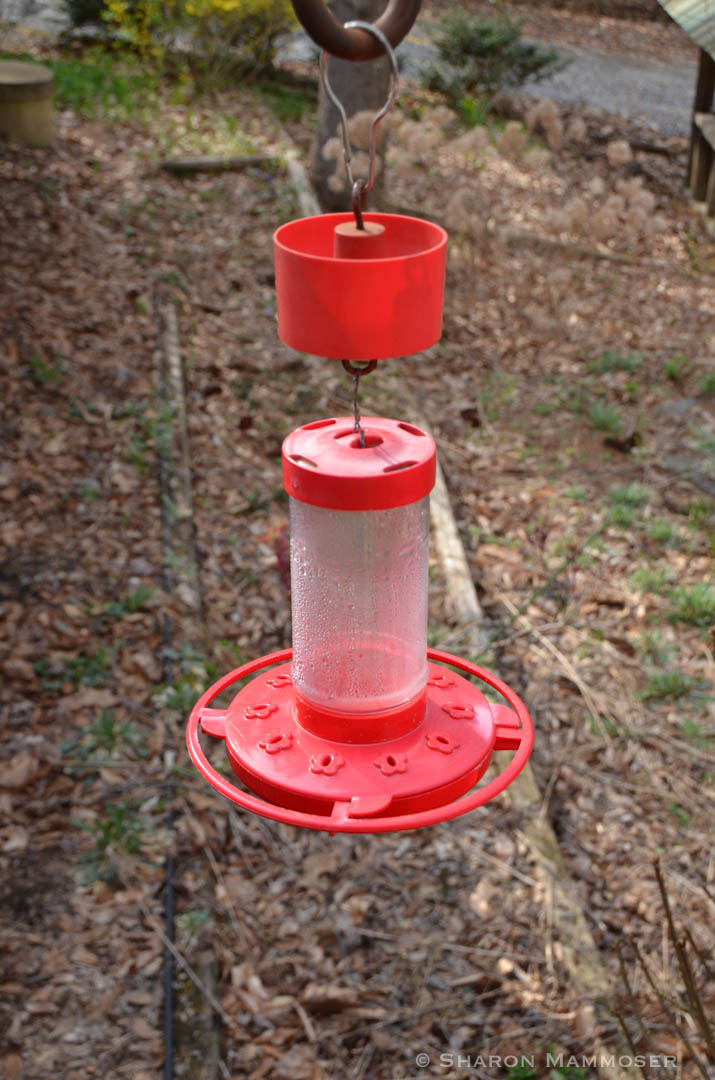
What are some flowers that attract hummingbirds? Answer: I wrote a post about that–here. But here’s a quick list: Choose any of these native species, bee balm, phlox, red columbine, crossvine, trumpet honeysuckle, salvia, passion flower vine, red buckeye, cardinal flower, blue lobelia, liatris, Larkspur, foxglove, fire pink, Indian pink, anise hyssop and jewelweed, are some perennials to get you started.  What feeder is the best for attracting hummingbirds? Answer: My favorite feeder is any feeder that comes apart easily, has no YELLOW on it, (because yellow attracts wasps) and has a built in ant moat. Do not buy a feeder that doesn’t come completely apart– no matter how pretty it is! My favorite is the suction cup feeder with a built in ant moat that I have on my office window. I love it because it allows me to see the birds super closely!
Do I have to buy hummingbird nectar? Or can I make my own? Answer: You could definitely make your own nectar as the kind you can buy in the store contains red dye which many biologists think is harmful to the birds. Plus it is cheaper to just make your own. All you need is water and granulated sugar. Making your own is super easy. Just measure one cup of plain, white sugar into a pitcher and then add 4 cups of hot water and mix. That’s it. Super simple.
Do I need to boil my hummingbird nectar? Or should I microwave it? Answer: No, you do not need to boil or microwave your nectar. Just run HOT tap water and mix it up so the sugar dissolves. Then put it in the fridge until you need it. (Boiling the nectar won’t hurt the nectar but is unnecessary. In the summer I have to refill my feeders every other day and the second one bird puts her/his tongue in the liquid, it’s no longer sterile.)
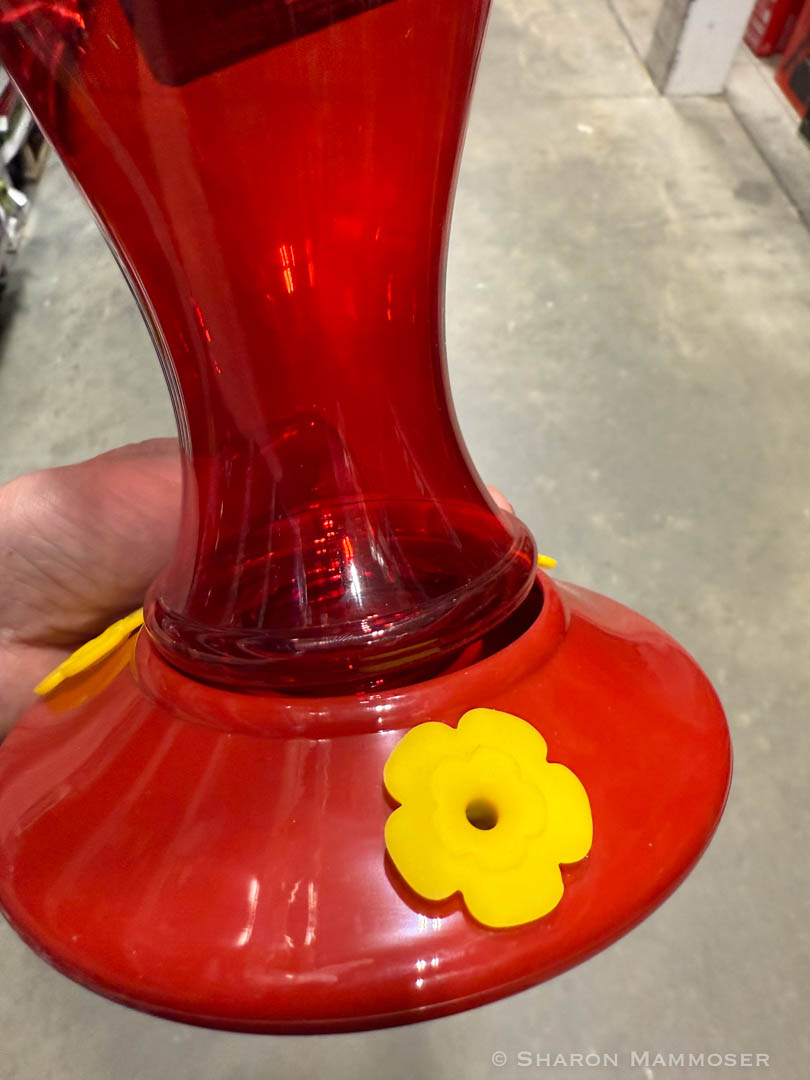
How can I keep yellow jackets away from my hummingbird feeders? Answer: Yellow jackets are attracted to the color yellow so one way is to choose feeders that HAVE NO YELLOW. Another thing you can do is make sure your feeder doesn’t leak–leaking feeders often attract yellow jackets, bees and ants. Fix or replace a leaking feeder.
How can I keep ants out of my hummingbird feeder? Answer: Buy a feeder with a built-in moat, or add an ant moat above any feeder you already have. Birds will regularly drink that water so make sure to change and refill it regularly.
How can I tell a male from a female? Answer: Mature males have a red gorget-– a throat patch that you cannot miss, especially when the light hits it just right. Females lack this gorget. Immature birds also do not have a gorget, but you can usually tell them apart because they have what’s often referred to as a “five o’clock shadow.” These birds have streaks on their necks, or sometimes a red feather or two by the end of the summer that gives them away. In addition, females have white tips on their outer three tail feathers on each side. Mature males have dark-tipped tail feathers. Immature birds may also have white tips on their tail feathers, just like females. In spring though, any hummer with white tail tips is an adult female.
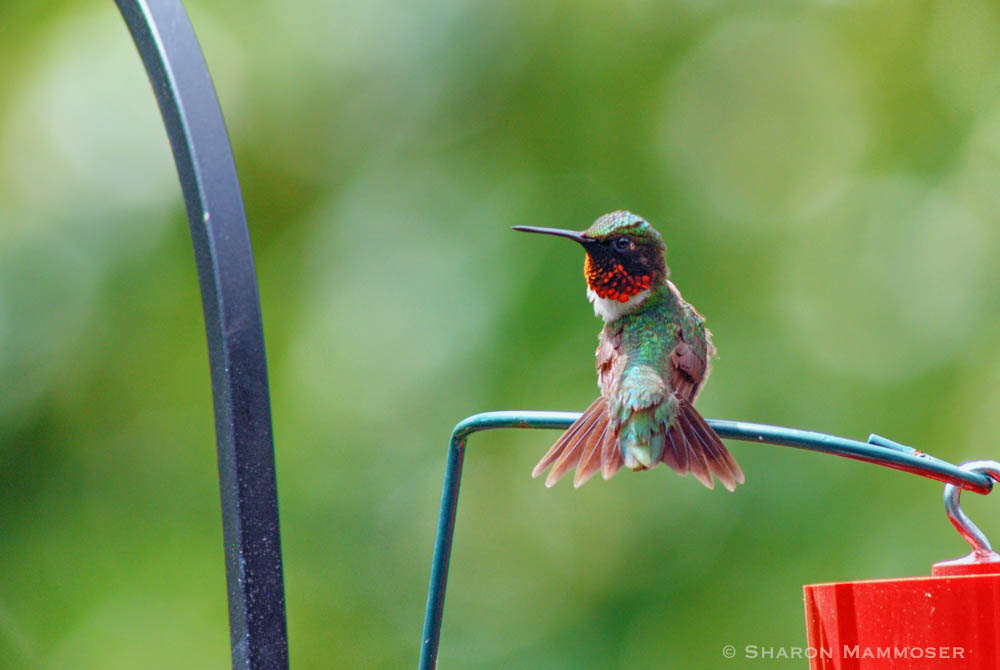
When will an immature male get his gorget? Answer: Young males will get their adult plumage, including their telltale gorget after their first winter.
Could I have seen a baby hummingbird at my feeder? Answer: No, because baby hummingbirds do not fly– they are in the nest, dependent on their mother. All hummingbirds that you see at your feeders are fully grown and capable of flying when they fledge (leave the nest.)
I saw a tiny hummingbird in my garden– what could it have been? Answer: Assuming you live in western NC, it could only have been a ruby-throated hummingbird, or a hummingbird moth. Chances are good it was not a bird at all, but a moth! We have several species of hummingbird moths that are active during the day, visit flowers to drink nectar, and look like hummingbirds. The giveaway though is that the moths have long antenna, and are smaller, at 1 and a half inches long. (half the size of an average ruby-throat)
How big are ruby-throated hummingbirds? Answer: When sitting, a ruby-throat is about 3 inches (2.8-3.5 inches) from the tip of their beat to the tip of their tail. Their wingspan is 3.1-4.3 inches.
How much do ruby-throated hummingbirds weigh? Answer: About as much as a nickel! Or 0.18 ounces!
Are male and female ruby-throated hummingbirds the same size? Answer: They are not. Females are typically 15-25% larger than males.
Do both males and females make the nest? Answer: No, nest building for ruby-throated hummingbirds is done only by the female. She builds the nest herself and she also incubates and feeds the babies. The male does not help at all with this process!
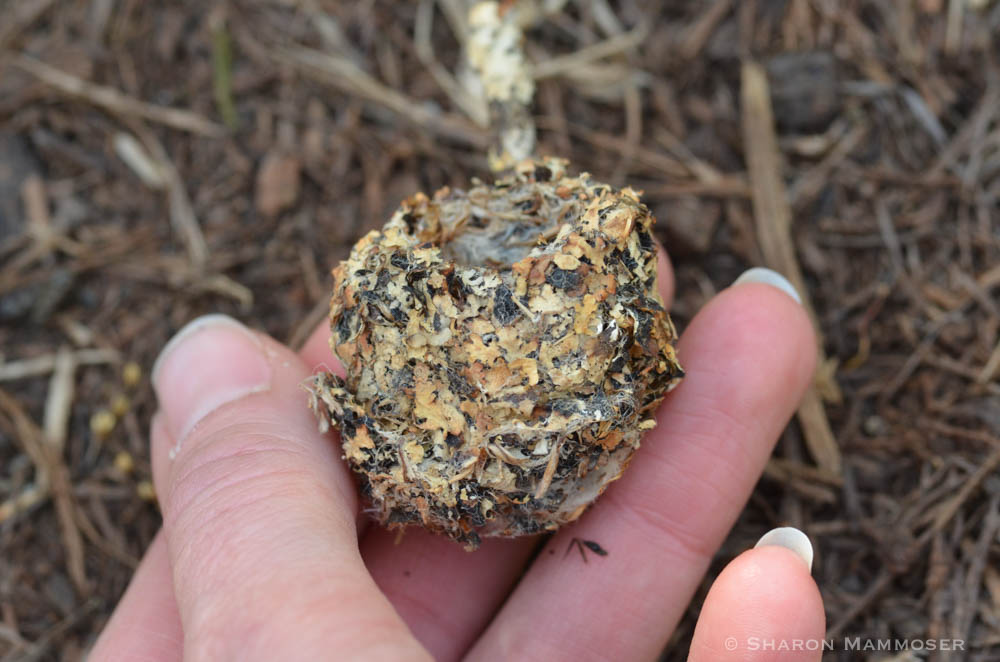
What do they build the nest from and how many eggs will they have? Answer: Females build tiny cup-shape nests made of grasses and plant fibers, which are often camouflaged with lichens and dead leaves. They collect spider silk to “bind” the nest together. Because this is stretchy, the nest can grow as the birds get bigger. Females lay clutches of two white eggs. These will be incubated for 11-16 days before hatching. The baby hummers fledge after about two to three weeks.
I found a dead hummingbird in my yard. What do you think it died from? Answer: Hard for me to say. If it’s by a window I would suspect a collision perhaps. Maybe a cat killed it, as cats are fierce predators and kill whatever they can get their paws on. But if not, it’s impossible to say with certainty. Sometimes hummingbirds die of starvation from black mold in hummingbird feeders. Scientists have discovered that if there is a lot of black mold in the feeders they use, this can make their tongues swell up and then the birds could starve to death. Mother birds can even pass this fungus on to their babies.
Clean your feeders often to prevent the buildup of black mold! Starvation is a slow and painful way to die–if you love hummingbirds, you must commit to keeping your feeders clean!
Can I use raw sugar, also called Turbinado, to make my nectar? Answer: PLEASE don’t! Though the word raw might sound like it would be better, it definitely isn’t, at least not for the little birds. Turbinado sugar contains a lot of iron and the small bird’s bodies cannot handle it. The iron builds up and can kill the birds. Please use only white, granulated sugar!
Here is an article about iron buildup in hummingbirds that ate raw sugar nectar.
Where should I place my hummingbird feeders? Answer: Other than putting them in a shady spot, location is not that important. Shady spots allow the nectar to last longer than spots in the hot sun. I like to put mine in shady spots close to areas where I can easily watch the amazing birds. It helps if there is something nearby–a tree, bush, etc for them to land on and provide cover. Put the feeders close enough to a window that you can enjoy the little birds– less than two feet is ideal. Otherwise, put them at least 30 feet to lessen the chance for collisions with the glass.
How often should I change out the nectar? Answer: It depends on where you live, where you place your feeders and what your habits are. A location of a feeder in the sun in Arizona will need to be changed a lot more frequently that a shady spot in the woods in NC. A good rule of thumb is every couple of days, unless it’s super hot, then maybe every other day. If you change the nectar regularly, and rinse the feeder out well each time, then it is much easier to keep the feeders clean. For most of my feeders, I seldom fill them up all the way because it just ends up wasting the nectar–better to put a smaller amount in and then clean, rinse and refill regularly. Extra nectar is kept in a pitcher in the fridge. Also, please note, if the nectar appears cloudy–it has fermented! You must change it out. Fermented nectar can harm the liver of the little birds.
What country has the most hummingbirds? Columbia with a whopping 164 species!! Followed by Ecuador with 132, and then Peru with 120, Brazil with 105 and Mexico with 97. You can see some of the amazing Ecuadoran hummingbirds here, from when I visited years ago. Hope you have found this helpful! Did you know you can plant flowers to attract these amazing birds? Here’s an article featuring some great flowers for attracting these birds. or Here’s an article featuring ten things you may not know about hummingbirds.
Enjoy your hummingbirds! 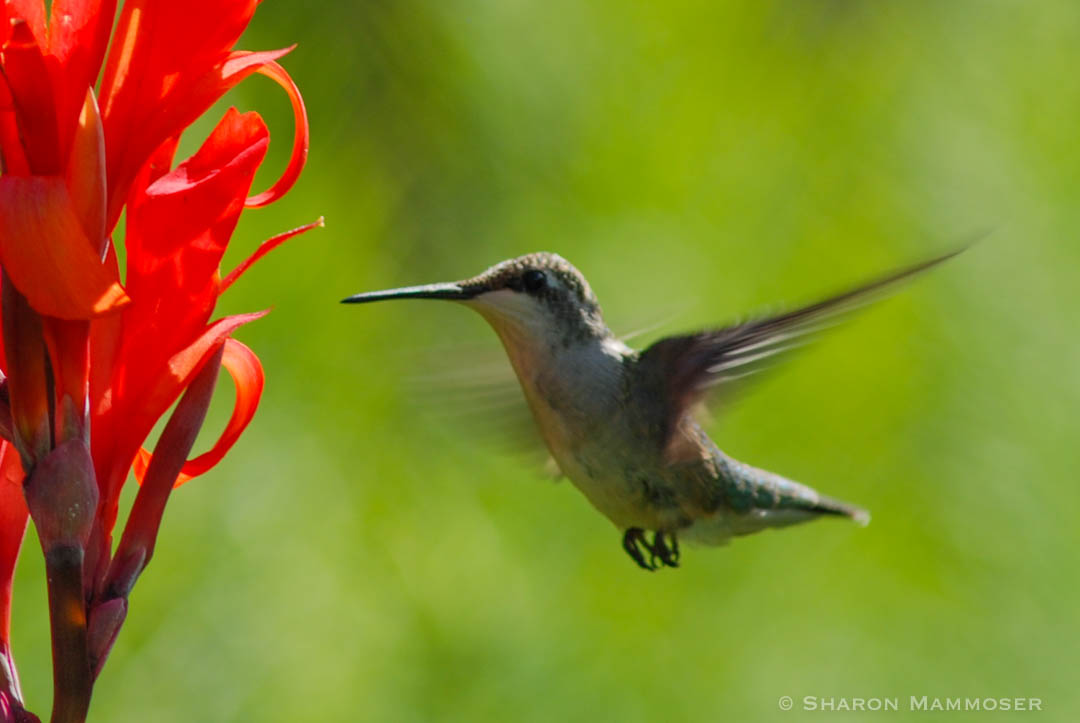
Thanks, Sharon, for this interesting article on Hummingbirds!
You’re welcome Renee. Thanks for reading. I hope you’re doing well and having a good summer. Nice to see you here!!