

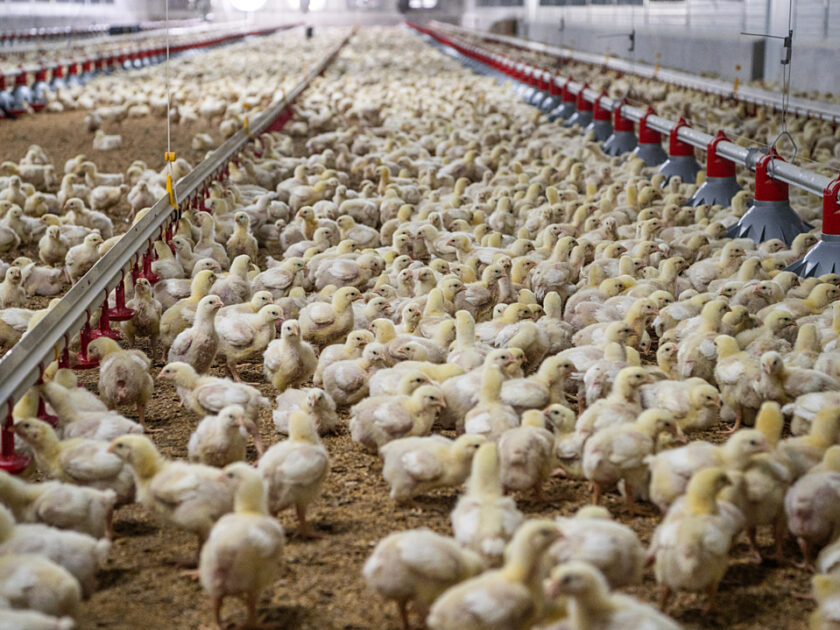
The Heartbreaking Reality:
One of the most common questions I’m asked as a vegan is why don’t I eat eggs, since the chickens are not killed for the eggs. Along these lines, people always want to know why I oppose backyard raised chicken eggs– people say, “But, they’re from happy chickens! What’s wrong with that?” Before I was vegan, I had the same questions.
The answer is simple: I don’t support the murder of millions of day-old male chicks, which is inevitable and unavoidable the way the industry works.
In order for people to be able to buy a backyard chicken, someone had to raise that bird, or those birds. And guess what? When they are breeding the birds they have no way of controlling whether the chicks are male or female. Male chicks are unwanted, unneeded, and discarded, usually on the same day they hatched. Many are sent down giant industrial conveyer belts that drop the helpless chicks into a macerator– grounding them up while still ALIVE, while others are put in gas chambers or suffocated in plastic bags. Either way, it’s a terrible fate and not one I would subject any sentient animal to, just so I can “enjoy” eggs. So yes, while your backyard chicken may be happy, those unwanted male chicks that had to suffer a cruel fate were far from happy. Sadly, you can’t have one without the other. If people could see and witness this happening, it seems unlikely they would continue to buy and consume eggs– a fact which the industry knows and works hard to hide. Even eggs labeled “humane” or “cage-free” or “free-range” still kill baby male chicks these same ways.
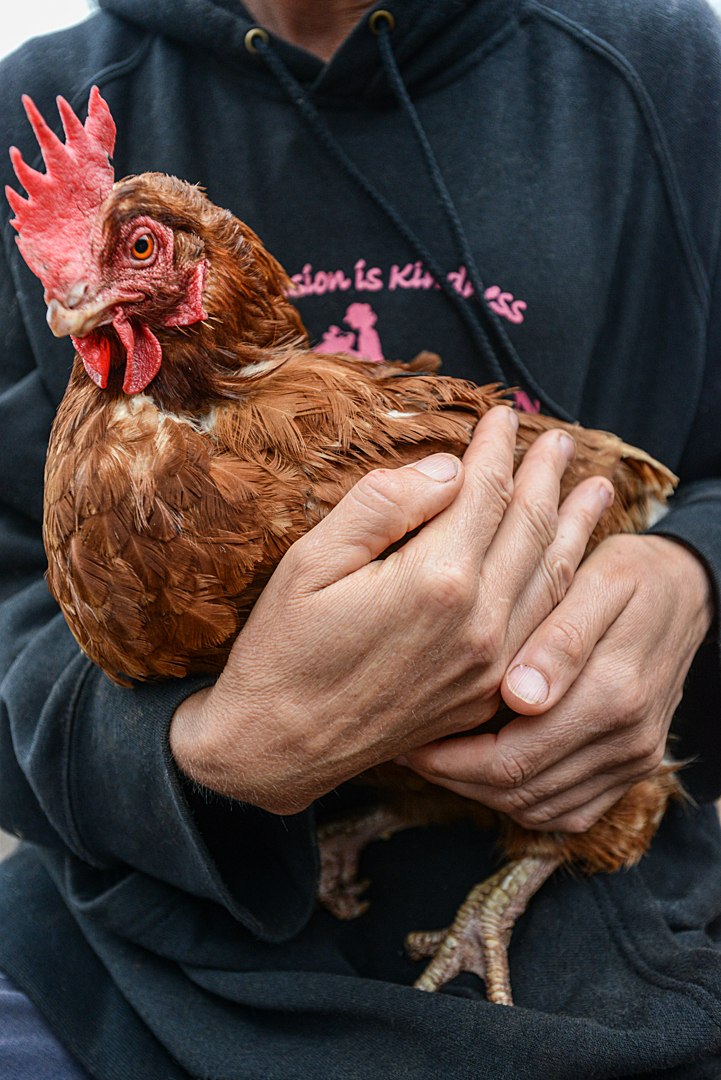
The Industry Propaganda:
Eggs are good for you! You need eggs in order to meet your protein goals. It’s natural for hens to lay eggs, and it doesn’t hurt them if we take their eggs. Eggs are a superfood!
Whole eggs are rich in many nutrients. Eggs are loaded with high-quality protein. Despite fears surrounding egg consumption and high cholesterol, research indicates no measurable increase in heart disease or diabetes risk from eating up to 6–12 eggs per week. ALL OF THIS IS NOT TRUE, as proven by science. In the same way the smoking industry told you smoking was fine, the egg and meat industry lies to you! Stop buying into this propaganda!
The Facts:
6 BILLION newborn male chicks are killed every year around the world, most on their very first day of life. Just read that again– 6 BILLION newborn male chicks are killed every year on the first day of their life.
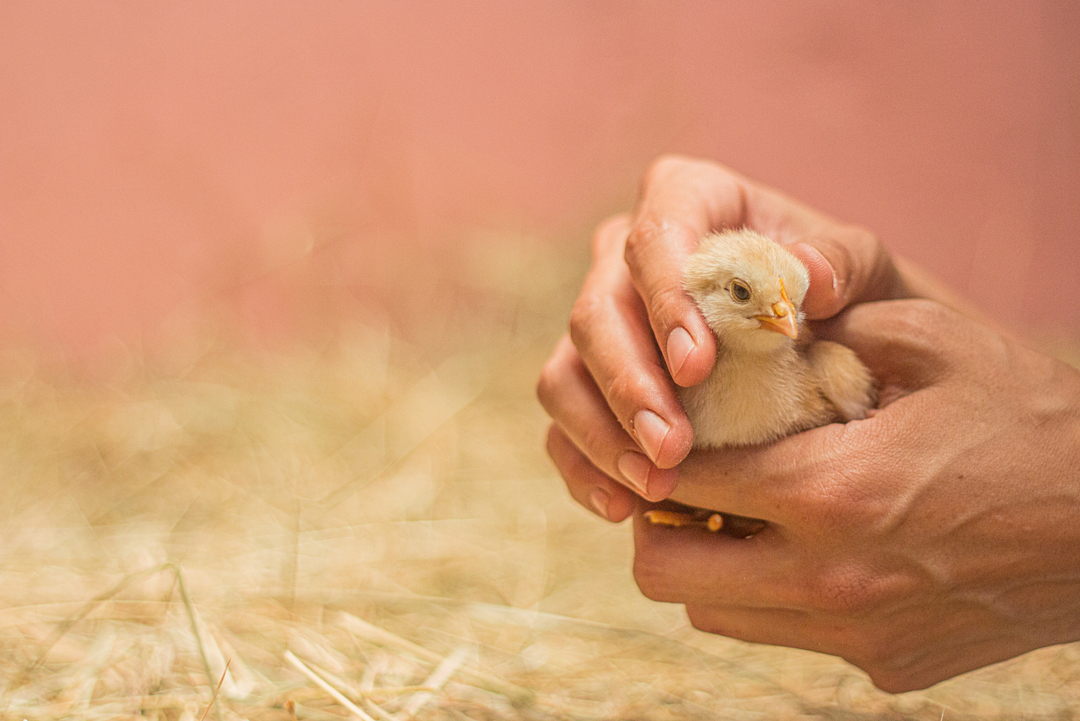 Co-founder Marisol de la Reguera gently holds one of resident hen Kiwi’s newborn chicks in her hands at the farm animal sanctuary Santuario Igualdad in Chile. Santuario Igualdad, El Monte, Santiago, Chile, 2015. Gabriela Penela / We Animals. People have bred chickens to lay unnaturally large amounts of eggs. Wild hens lay 10-15 eggs per year. Modern hens lay 250-300 eggs per year. This requires a lot of energy and takes a heavy toll on the hen’s body. The focus is on egg production, not humane or kind treatment of the hens. . According to FreeFromHarm.org, “Overproduction of eggs is responsible for numerous disorders in hens, including often fatal diseases of the reproductive tract; osteoporosis and accompanying bone fractures; and, in some cases, total skeletal paralysis, sometimes referred to as “caged layer fatigue.” Osteoporosis and bone fragility from unnatural lay rates are also greatly exacerbated by lack of exercise: more than 95% of egg laying hens in the U.S. spend their entire lives confined in battery cages so small they cannot even spread their wings.”
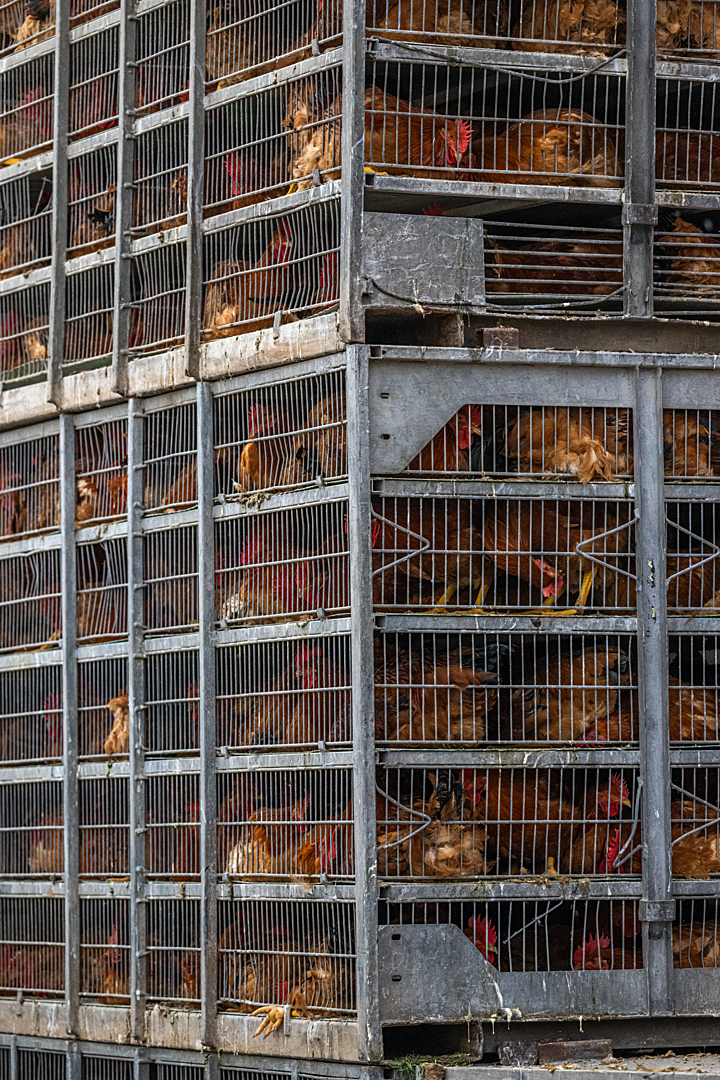 Chickens sit tightly packed inside a high stack of multiple transport crates outside an urban slaughterhouse. New Stockton Poultry Market, Stockton, California, USA, 2024. Jo-Anne McArthur / We Animals. “Cage free” doesn’t mean the birds are outside, enjoying the sunshine and freedom to roam. They are kept indoors, in giant barns or sheds with no windows or access to grass, sunlight or freedom.They cannot engage in natural behaviors such as perching, dust-bathing, or foraging.
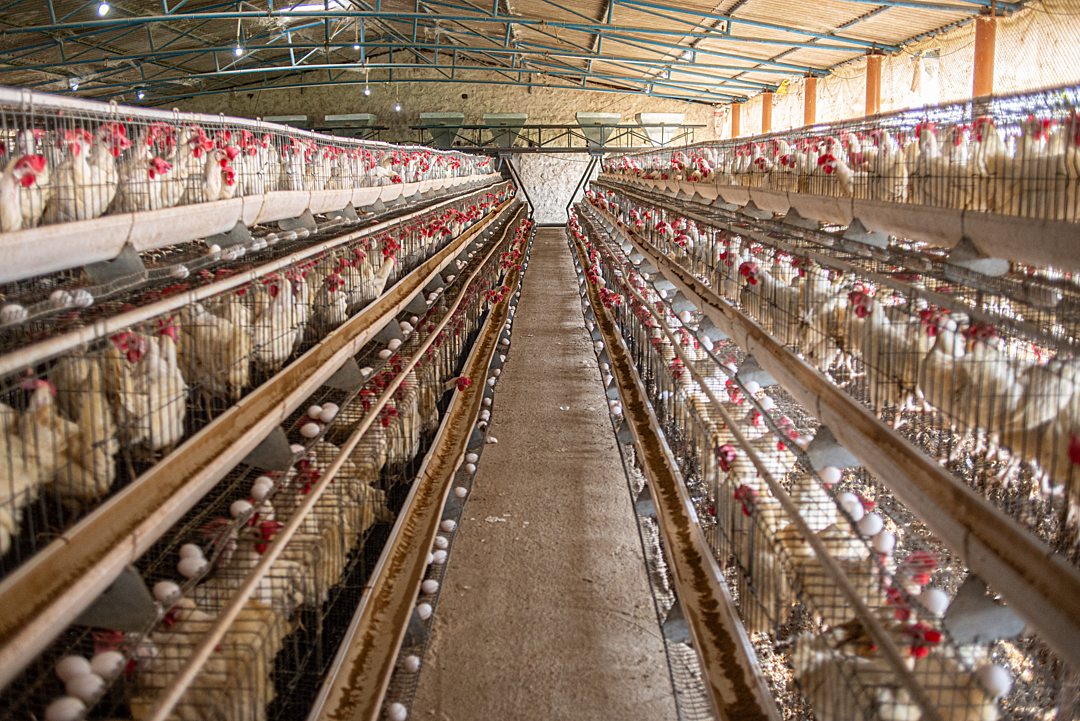 Thousands of hens occupy battery cages, four to five birds per cage, at an egg production farm. The cages are stacked in long rows that run the length of the laying shed. 2024. Shatabdi Chakrabarti / Open Wing Alliance / We Animals. Scientific studies show that newborn chicks are more intelligent, alert and aware than human toddlers.
Hens are sensitive to the hours of daylight, naturally producing more eggs during summer when the days are longer. Not surprisingly, farmers exploit this, keeping the sheds lit with unnatural light, manipulating the hours of “daylight” so the hens are tricked and think it’s summer all the time, forcing them to lay more eggs.
Battery cages are common. 5-11 hens are crammed into these small spaces, with no extra room to move around, spread their wings or be alone. The cages are often stacked on top of other battery cages, which means urine and feces from the top chickens falls down onto the hens in lower cages.
According to the Humane League.org, “Chickens naturally molt in order to grow new, warmer feathers ahead of the winter. This process involves decreased eating, dropping feathers, and not laying eggs. On farms, chickens are starved to force their bodies to start the molting process, regardless of their natural inclinations. This forced molting is done when egg productivity begins to drop, as afterward the birds are known to start laying again, producing a higher number of larger eggs.”
The industry labels two kinds of chickens– broilers, and layers. Layers are those hens that lay eggs, while broilers are bred to grow quickly and are slaughtered for their meat. The bodies of layer hens deteriorates rapidly and they are sent to slaughter houses when they are only 18 months old. The natural lifespan of a chicken is 10-15 years.
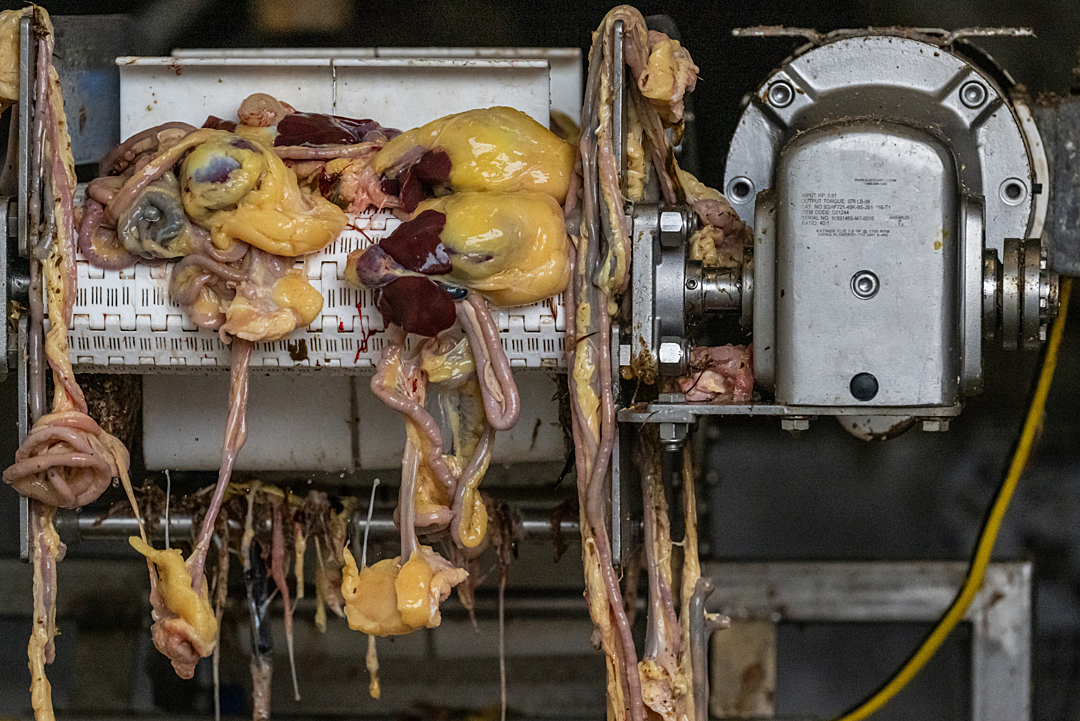
Forced to live in close quarters, with their feet on metal wires all the time, hens are under great stress. To prevent birds from pecking each other, farmers clip their beaks with a hot iron– without any pain medicine. Some hens die from shock. Imagine being stuffed in a cage with 10 other birds, not being able to spread your wings, feel grass or even walk around. Even without a beak, hens will often peck each other, sometimes causing injury or even death. Hurt or dead hens then are left to rot in place, with the other hens forced to live around them.
Like our own pet dogs and cats, chickens exhibit a range of personality traits, from outgoing and social, to quiet. They display emotions, have friends and recognize faces.
Research has shown that humans can get all the nutrients they would get in eggs, from PLANTS. There is nothing in eggs we need to survive, and in fact, the cholesterol in eggs is a contributing factor to heart disease. Don’t believe me? Check out this article, as well as the references and links below.
If you’re curious about what happens to baby male chicks, check out this video. Then maybe you’ll understand why people stop eating eggs. If you raise chickens, or eat eggs, you are supporting this cruelty!
There is nothing in eggs that humans need to thrive and survive. Will you make a change today stop supporting this cruel industry?
Take Action! What YOU Can Do:
- Stop buying into the propaganda! Stop consuming eggs and products made from eggs.
- Have the courage to align your values with your actions, instead of supporting this cruelty. GO VEGAN!
- What’s wrong with eggs? The truth about the egg industry
- Replacing eggs in recipes
- Watch Cowspiracy.
- Watch Earthlings
- Watch Dominion
- Farm to Fridge
- Good For Us: Eating Veg
- Share what you’ve learned with everyone you know! Change happens one person at a time and every single person can make a difference.
References:
Eggs–New Heart Health Food, or Rotten Reporting?
Four Reasons Why Superfoods Could be Dangerous
Don’t get cracking;How Egg Lobbies skew research