September 27, 2024 was a day for the record books in western NC. Hurricane Helene came barreling through our beloved mountains with a force none of us ever thought possible so far from the sea. Trees, bridges, homes, buildings, even entire towns, were swept away. Roads crumbled into rivers, trees fell as though pushed over by giants, their massive root balls still intact, littering the ground like giant lollypops. All around us, on every road, our familiar landscapes were transformed overnight, resembling something from a science fiction film, not real life.
We so often associate the word anniversary with a celebration, a joyous occasion to mark the passing of another year. But anniversaries of such tragic events can feel as devastating as the day life changed exactly a year ago. Anniversaries of tragedies like Helene are forever linked to the feelings like loss, sadness, hopelessness and heartbreak. And yet, it’s impossible for us to just not notice. We see it on the calendar, know it’s coming for days before it does. Our hearts feel heavy, the knowledge overwhelming that there’s no way to pass this day without feeling it all over again. There’s no way around, only through. We might say things like “He would have been 46!” or “We would have been in business 24 years!” Forgetting is impossible, especially on anniversaries like this.
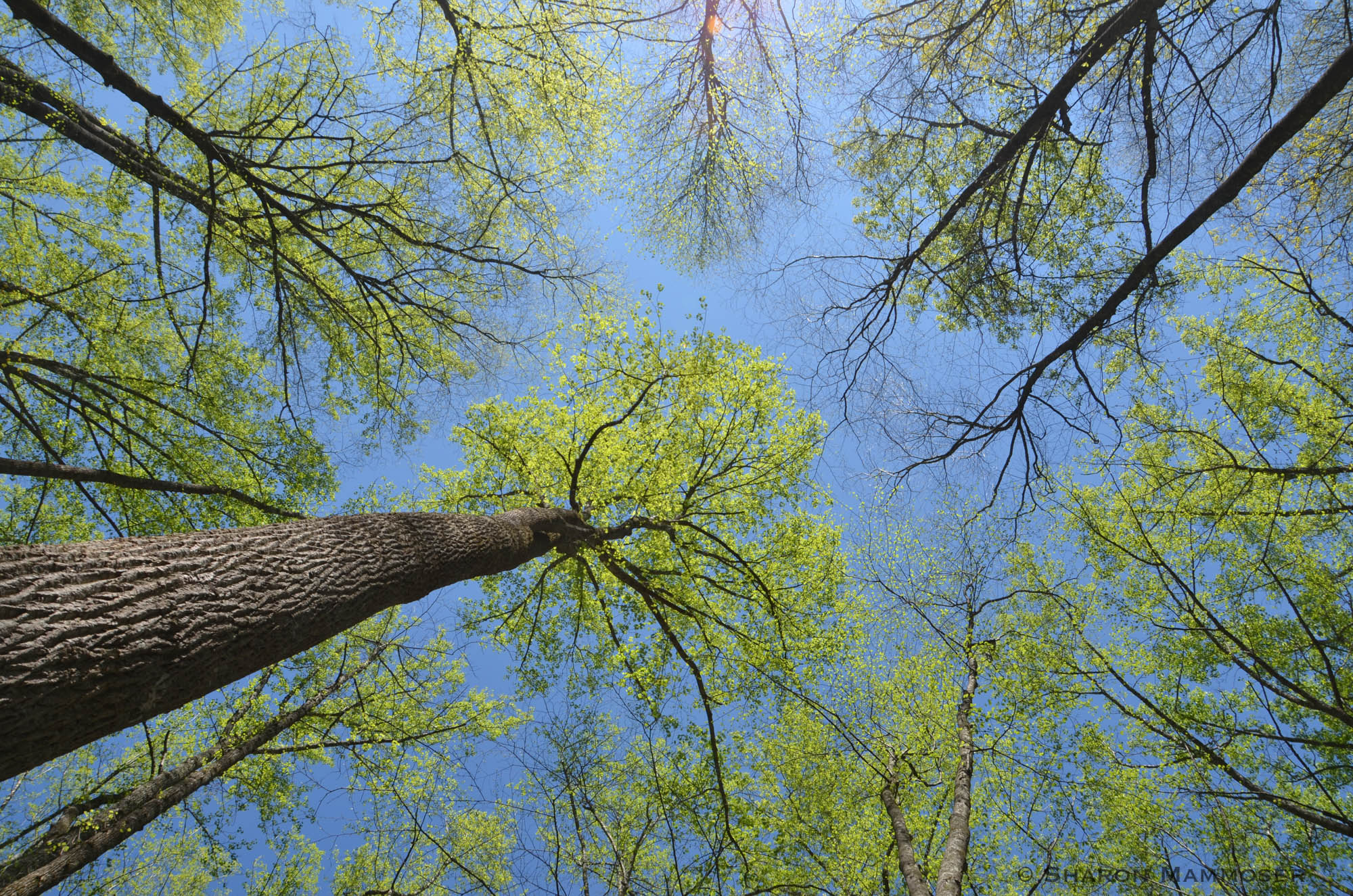
A whole year has gone by! In that year brand new trees have sprouted from seeds, their tiny leaves reaching faithfully for the sky, fungal strands of mycelium have forged new pathways, made new connections, birds and other animals have raised babies, sent them into the world as independent beings. Where there was once a hillside of trees might now be a carpet of ferns and wildflowers, joyous for the sunlight that they found themselves in when once there was only shade. Isn’t all of this new life, new growth enough to give you hope? Mother Nature always adjusts, moves forward, her cycles and rhythms forever rebalancing, recalibrating, renewing.
Change is never easy, and forced change of this magnitude feels unwelcome. We humans do not enjoy having to learn a new way, or adopt to a new paradigm, especially when it’s not our idea in the first place. Even a year later, some people from our area are still without things they treasured, and loved ones who shared their days.
“A dozen angels have started living in the holes in my heart. They have put up hammocks and started planting roses. Last night, they had a bonfire where they burned a box of my oldest regrets and played drums until dawn. These angels have made themselves at home inside of my imperfect heart in hopes that someday I’ll do the same. ” –John Roedel
There are some who will say this hurricane, these floods, droughts, heat waves, and other weather extremes, are because our world is warming unnaturally, and that humans are responsible for the changes that are being thrown at us faster and more frequently. Our habits, our greed, our ignorance are destroying the natural rhythms that have been in place for eons. Whether or not you agree with this comes down to only one thing: do you believe in science? Because science does not take sides– it is not political, personal, biased towards one sex over another, one species over another, or what you call your god, or if you even have one in the first place. Science, as stated in the dictionary, is simply “observation, identification, description, experimental investigation, and theoretical explanation of phenomena.” Science is about the facts, pure and simple, and scientists will follow the facts, regardless of where they lead. Therefore, our reaction to this hurricane, to all of these alarming climate changes should be rooted in science. What does the science say? Where does the evidence lead?
According to NASA, “The term global warming refers to the long-term warming of the planet. The term climate change encompasses global warming, but refers to the broader range of changes that are happening to our planet.” US Global Change Research Project says, “These broader climate changes include: rising sea levels, shrinking mountain glaciers, accelerating ice melt in Greenland, Antarctica and the Arctic, and shifts in flower and plant blooming times.” In its Sixth Assessment Report, the Intergovernmental Panel on Climate Change, composed of scientific experts from countries all over the world, concluded that “it is unequivocal that the increase of CO2, methane, and nitrous oxide in the atmosphere over the industrial era is the result of human activities and that human influence is the principal driver of many changes observed across the atmosphere, ocean, cryosphere and biosphere.” Sounds bleak, right? But keep reading.
In the spring I attended an event at UNC Asheville. It was titled something about finding hope and featured two women speakers. In my optimism, I thought maybe this was going to be the moment when someone powerful, someone with a large following and sway was going to say what I knew to be true months ago, what activists Greta Thunburg and Jane Goodall have been trying to tell us for years. Both women are largely ignored, shoved down by the masses because what they are saying is not convenient. More people needed to be on this page, I thought, hoping these women visiting us in WNC would bring awareness to this subject and get the conversation started. By the middle of the second speaker, I knew the revelation wasn’t coming, disappointed. Like so many before them, they talked about hope in the context of small things– forging a deep community and staying connected with our fellow humans, about having a yard full of habitat and finding joy in watching wildlife and green things bloom. Am I saying that’s not important? Of course not, it is, and does have value. But those things are so insignificant, meant for us to feel better, rather than to make a difference. Because for those of us paying attention to science, for those of us taking time to watch the films*(listed below), and read the papers, it fell short of giving us actual things we can do to change the world, things that will give us power and make a difference– and things that will give us a reason for hope.
Guess what? Climate scientists also agree that there is a solution, or a move in a better direction, to the global warming crisis, one each of us can participate in. It’s one way to step into your power, and make a difference– not just a tiny thing you do to make yourself feel better, but an action with a giant impact on our world–and reason for hope. In the 1990s, a study began involving over 500,000 people in 10 European countries. It was coordinated by the World Health Organization International Agency for Research on Cancer in Lyon, and supported by the European Union and national funding agencies. They studied dietary data and linked what people ate or drank to five key measures: greenhouse gas emissions, land use, water use, water pollution and biodiversity loss. They tracked people in this study for more than two decades! They published their results in Nature in 2023. (in Scarborough, P., Clark, M., Cobiac, L. et al. Vegans, vegetarians, fish-eaters and meat-eaters in the UK show discrepant environmental impacts. Nat Food 4, 565–574 (2023). )
At the end of the study, lead author Joseph Poore said: “A vegan diet is probably the single biggest way to reduce your impact on planet Earth, not just greenhouse gases, but global acidification, eutrophication, land use and water use.”
He went on to say “It is far bigger than cutting down on your flights or buying an electric car,” he explained, which would only reduce greenhouse gas emissions. He goes on to say, “Agriculture is a sector that spans all the multitude of environmental problems. Really it is animal products that are responsible for so much of this. Avoiding consumption of animal products delivers far better environmental benefits than trying to purchase sustainable meat and dairy.
“One surprise from the work was the large impact of freshwater fish farming, which provides two-thirds of such fish in Asia and 96% in Europe, and was thought to be relatively environmentally friendly. “You get all these fish depositing excreta and unconsumed feed down to the bottom of the pond, where there is barely any oxygen, making it the perfect environment for methane production,” a potent greenhouse gas, Poore said.” –From The Guardian
The Researchers at Oxford found that “cutting meat and dairy products from your diet could reduce an individual’s carbon footprint from food by up to 73%” They go on to say, “Unsurprisingly, diets containing more animal-based foods had higher environmental impacts. Per unit of food consumed, meat and dairy has anywhere from three to 100 times the environmental impact of plant-based foods.” The researchers concluded that “If everyone stopped eating these foods, global farmland use could be reduced by 75 per cent, an area equivalent to the size of the US, China, Australia and the EU combined…Loss of wild areas to agriculture is the leading cause of the current mass extinction of wildlife.” Imagine how big that is, and how many wild animals we could support again. According to Climate.apocalypse, humans have destroyed 83% of wild animals. Right now 60% of animals on our Earth are livestock, 36% are humans, which leaves only 4% wild animals. Does this seem right to you? Does it seem sustainable or good for the Planet? Doesn’t it seem wrong that we can feed 80 billion land animals, but not 8 billion people? When are we going to start talking about this, and making real changes that make a difference? Is there reason for hope in this terrible story of climate change? Absolutely! But it means each of us needs to make changes that right now might seem unwelcome, inconvenient or too challenging to take on. But to have hope for the future of our planet, we must!
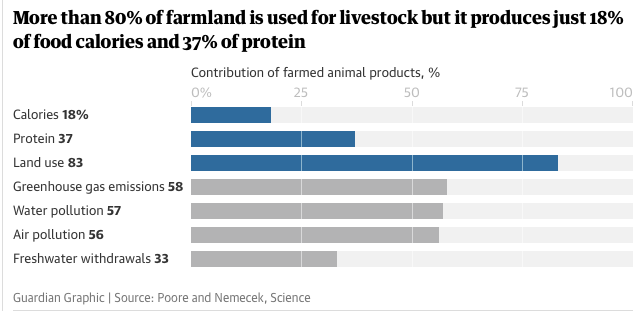
It’s not everyday that someone gives you an action you can do to make a difference as great as this, a way to step into your power. Talk about hopeful! You can be the change you want to see in the world! Like the ladies at the lecture I attended, we are usually told a handful of things we can do–recycle, not use single-use plastics, drive more efficient vehicles, not waste water, and on and on. And while all of those things can add up, none present the impact this dietary change can have on our Planet.
There are many reasons for hope:
Mother Nature always adjusts
Life Goes On
Community unites in tragedy
and most importantly, we HAVE a way to address climate change! It’s in our power! We CAN make a difference!
We don’t have to sit around waiting for the government or corporations to do the right thing– WE can do the right thing, right now! Starting with what we put on our plates and in our mouths. The science is clear that changing the way we eat makes a tremendous difference!
So what will you do? Will you change to help the Planet? Will you step into your power to make a difference, to show you care about our Earth and the future of our planet for generations to come? Or will you deny the science, look the other way, say you’re not ready for change, or consider it someone else’s problem?
“I asked the river, ‘What if you lose your way and end up on the wrong path?’ The river replied, ‘There are no wrong paths. Only different ways to arrive.” –Mansi
*Films:
(Watch ONE and change your life)
The Devastating Consequences of Animal Agriculture on Earth
Articles:
From the Independent:Veganism is ‘single biggest way’ to reduce our environmental impact, study finds
From Science Alert: Oxford Scientists Confirm Vegan Diet Is Massively Better For Planet
From the BBC: The climate benefits of veganism and vegetarianism
From the Guardian: Avoiding meat and dairy is ‘single biggest way’ to reduce your impact on Earth
From Harvard School of Public Health: Vegan diet can benefit both health and the environment
From the University of Oxford: Vegan foods better for the planet even when processed, study confirms
From the David Suzuki Foundation: Study shows vegan diet is best for people and planet
From Green Matters: Research Suggests The Best Thing You Can Do For The Earth Is Avoid Meat And Dairy
From Eco Watch: ‘A Vegan Diet Is Probably the Single Biggest Way to Reduce Your Impact on Planet Earth’
Well said. That took courage. It took lots of these prods for me to finally give up meat and dairy after decades but I am grateful every day that I am doing my part
Thanks. I am also happy everyday that I am vegan. I feel better knowing my actions now align with my moral compass. Thanks for joining me!!
Gosh, Sharon. Where do I start? You have put an incredible amount of research and thought into this. I definitely plan on reading and watching as many of your recommendations as I can. I have many moments of hopelessness, as well. I must tell you, though, I saw Turtlehead reblooming on a recent hike which had been completely destroyed and changed by Helene. That little pink flower made me feel elated and joyful, at least for that moment and I thought of you then as I do often.
Thank you for putting out this important newsletter.
Renee
Renee, it’s great to hear from you! Happy day! Thanks for taking time to read, and respond. It’s so easy to feel hopeless as we see more negative news than positive news. Seems like that’s just the norm. But I think there are also reasons for hope, especially like your example of turtlehead blooming in a place that was changed by Helene. Mother Nature never complains, only rebounds, regrows, and comes back stronger. We can learn from her.
Great advice, Sharon!