

I bet by now you’re aware of why it’s important to add habitat to your yard and minimize, or eliminate your lawn. In recent years there’s been a movement towards making our outdoor spaces more wildlife friendly. We can do this by adding a variety of native grasses, trees, shrubs and flowers. Have you ever considered adding vines to your yard? If not, you should. Vines can increase a garden’s appeal by adding an element of height, texture and color. Many vines offer attractive flowers, great fall foliage, and fruit that appeals to many birds including our migrating warblers. Vines can maximize a small space where room is at a premium. Vines can create a ground cover and shade out unwanted plants like multi-flora rose or Japanese stilt grass, and can cover or hide unsightly structures, or provide much-needed privacy, such as when grown on a fence. Many of our native vines like Virginia creeper, grape and passion vine are host plants for caterpillars, a bonus because 96% of our songbirds require caterpillars and other insects when raising babies. Want to enjoy more birds in your yard? Then add more native plants, including vines! Grown on a trellis or arbor, vines can also create a shady oasis. Below are five native vines for your yard.
Many vines you might see in your travels throughout western NC are NOT native to this area, and are extremely aggressive, often taking over entire hillsides, trees, and structures. These vines make people reluctant to add vines to their yards, worried the vines will take over and be hard to control. Vines like this DO exist, but there are also many native vines that do just fine in yards. Non-native, invasive vines are NOT the kind of vines you want to invite into your yards! These vines cause all kinds of damage, including killing trees, shading out native plants, and taking over until they become a vast monoculture where nothing else can grow. Most of these non-native vines provide little or nothing to our local wildlife and once established, are often impossible to remove. Part of being a good steward involves not inviting these aggressive vines into our landscapes, for most of these are impossible for homeowners to contain, no matter how hard they may try.
Remember, just because the nursery you go to sells them does not mean you should buy them!
Here are 5 NON-NATIVE vines that you should avoid at all costs! (This list could be a lot longer, but these are five of the worst offenders and most commonly found in our area.)
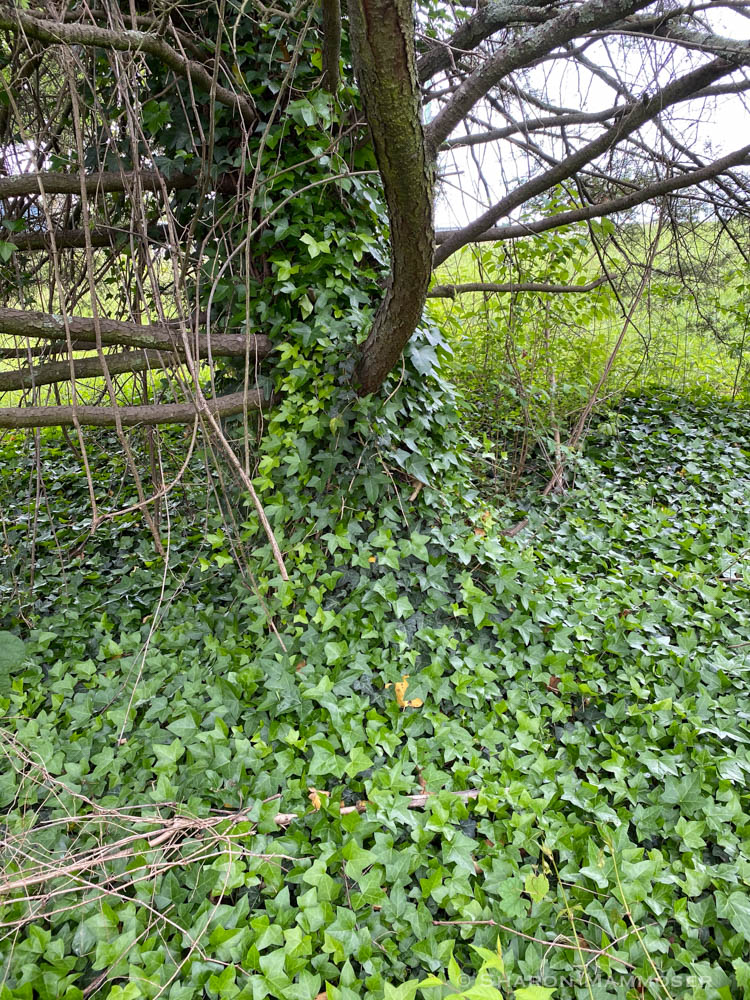
1.English Ivy (Hedera helix). Look, I want to be as clear as possible– DO NOT PLANT ENGLISH IVY! There are many websites that talk about English Ivy with glowing praise, calling this disastrous vine elegant, versatile and adaptable. To choose this non-native, invasive plant is selfish and irresponsible, as no matter how hard you try, it will NOT stay in your yard! English ivy is native to Europe, western Asia, and northern Africa. The plant has been introduced to other parts of the world, including Canada and the United States. Unfortunately, as an introduced plant, ivy has no natural enemies to control its growth. Sadly, some local nurseries still sell this fast-growing, aggressive vine. English Ivy grows upward with sticky discs and aerial roots, both of which can damage structures. People often choose English Ivy for its speedy growth rate, but this plant easily gets out “into the wild,” wreaking havoc on local plants. Birds eat the berries and then spread the seeds far from the original source and this vine can root from cut stems, making pulling it out nearly impossible, as with each new cut, it can start anew. And make no mistake, English Ivy kills trees! Its growth acts like a sail, making the tree more prone to breakage and falling in wind storms. Thick leaf growth means the leaves of the supporting tree can’t get the light they require for photosynthesis and will eventually cause the host tree to die. English Ivy also traps water, possibly introducing fungus that can harm the tree it’s on. Please, please, please, give English Ivy a hard pass, as this aggressive vine is almost impossible to get rid of once established.
2.Asian Wisteria (Wisteria sinensis, Wisteria floribunda, and floribunda x sinensis hybrids.) These flowers may be fragrant and pretty, but when these wisteria varieties escape gardens and establish in natural areas, they quickly displace native vegetation, and kill trees by strangling them with their heavy vines. Good neighbors don’t put this vine in their yards!
3. Oriental Bittersweet (Celastrus orbiculatus) This vine was introduced to the Untied States from Asia in the 1860’s. Since then it has become a nuisance, choking out native plants and smothering them with dense foliage. Its thick, woody vines strangle trees, slowing cutting off vital nutrients. In some areas, the forest floor is carpeted with a continuous blanket of bittersweet, making it impossible for our native plants to get light, nutrients, and to grow. Like English Ivy, this plant is still sold at nurseries, and just as bad, it is often used to make wreaths– a practice that introduces the berries, and new vines, to new areas.
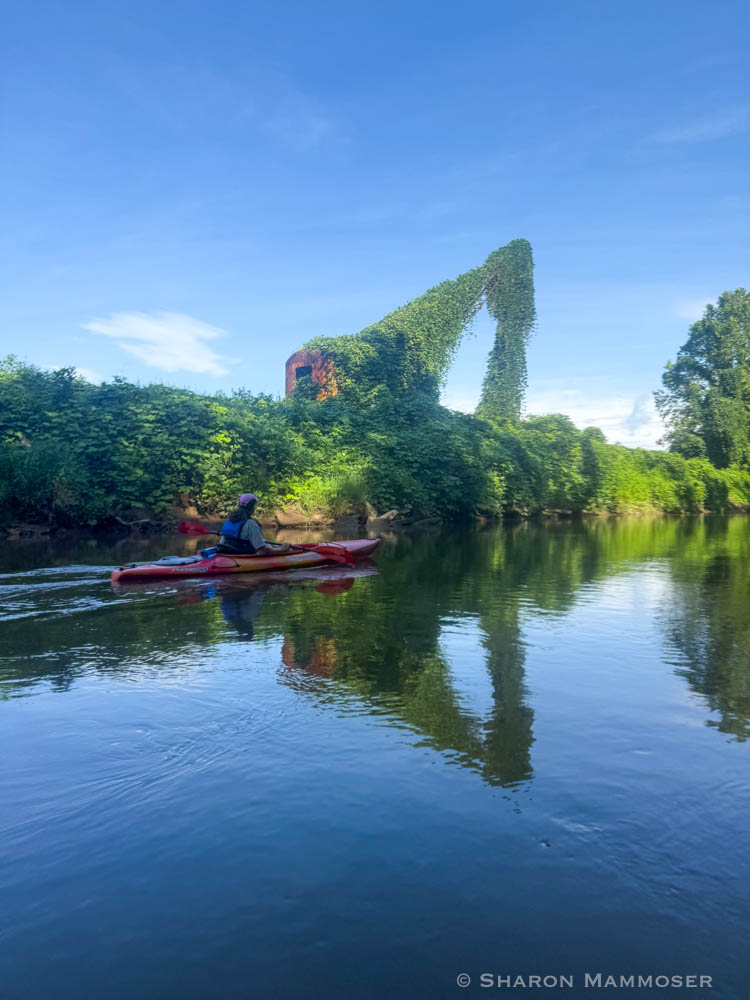
4. Kudzu (Pueraria montana) Often called “the invasive vine that ate the south,” this is a horrible vine that should be avoided, and destroyed. According to the Nature Conservancy, “Kudzu grows out of control quickly, spreading through runners (stems that root at the tip when in contact with moist soil), rhizomes and by vines that root at the nodes to form new plants. Once established, kudzu grows at a rate of one foot per day with mature vines as long as 100 feet.” No plant, building, tree, fence or other structure is off limits to this very prolific vine. It has 3 broad leaflets that can be up to 4 inches across. In no time at all, it can smother pretty much anything in its path.
5. Japanese Honeysuckle (Lonicera japonica) This plant is also called Chinese Honeysuckle, Gold-and-silver Honeysuckle, Hall’s Honeysuckle, and Japanese Honeysuckle. It is a super fragrant plant, native to Japan, Korea, Manchuria and China and has naturalized in the United States where it is considered highly invasive. According to the NC Extension, “It can be both a twining, climbing vine or prostrate and trailing ground cover, spreading both by rhizomes and above-ground runners as well as wide dispersal of the seeds by birds and small mammals that eat the berries. It is a rampant grower that can reach 16 to 29 feet high and 3 to 6 feet wide. It is capable of growing over plants and smothering them. It can displace native species by outcompeting plants for light, space, water and nutrients.”
Now that’s we’ve established some vines to avoid, let’s talk about some great vines to choose. All of these are native to NC.
1.Passion flower, passionflower vine, maypop, passion vine, (Passiflora incarnata) Wait until you see the gorgeous, exotic looking flower on this vine! Native to the southeastern United States, Mexico and Central America, this vine grows quickly, does fine in our winters, offers a dazzling, intricate flower, has edible fruit, (you can use this to make jellies, jams, syrups) AND is the host plant for two of our most beautiful fritillaries– the variegated and gulf fritillary, as well as the banded and red-banded hairstreak.
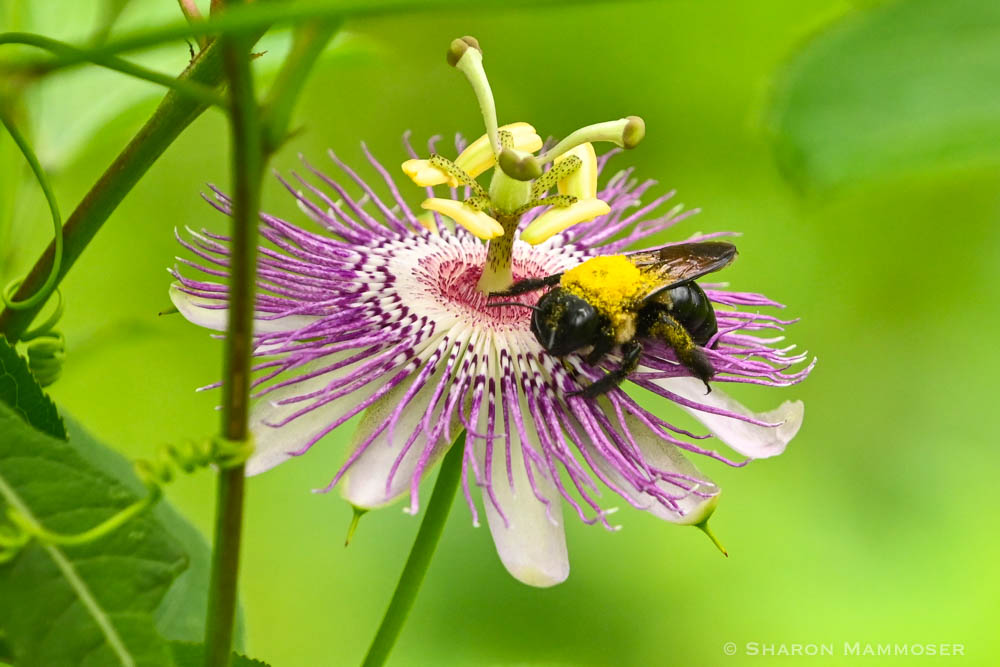
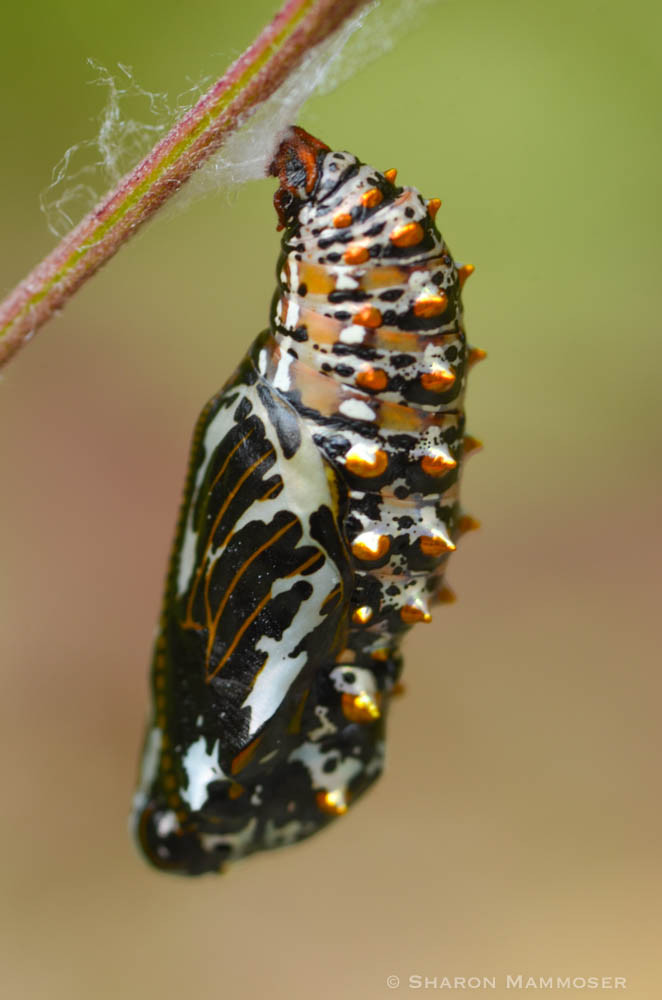
Growth Habit: Passion flower spreads via tendrils that allow it to attach to trellises, fences, or other structures; can also spread through underground rhizomes, making it a vigorous grower in ideal conditions.
Light requirements: Best growth and flowers are produced when planted in full sun (8+ hours), but will also grow in part sun.
Spacing: Plant passion vine 3-5 feet apart so allow for spreading.
Best Uses: Put it on an arbor, pergola, trellis, or fence, especially where its exotic flowers can be appreciated closely. Offer your passion vine something to climb on and it will do well. Its sprawling habit and fast growth make it ideal for covering large spaces, such as on a privacy fence, or unsightly wall. Using self-clinging tendrils, it will form a dense mat, and can even be planted on a hillside where it can be left alone.
Notes: Passionvine is an exuberant vine that can take over small spaces. It dies back in the winter, but “pops” back up in May– hence the nickname, maypop. (This name may also come from the popping sound it makes when you step on the fruit) It is best planted by a fence or large space and will need to be trained to grow there. Re-direct the tendrils to twine where you want. Left unchecked it can spread through root suckers/rhizomes and form a dense patch so plan accordingly– this is a great choice for a sunny hillside where you want erosion control, but not a great plant in a small garden. This vine often comes up a few feet away from where you think it should. It has a high flammability rating, so avoid planting it within the defensible space of your home.
2. Cross Vine (Aristolochia macrophylla) This native vine is a true powerhouse in the garden, offering an early nectar source for hummingbirds, gorgeous fall color, evergreen, or semi-evergreen foliage, fragrant flowers that last 4 weeks and are a magnet for butterflies and bees, and, it climbs by way of claws on the tips of its tendrils, making it possible to scale walls, fences or other vertical structures with no support. Its name comes from the cross shape inside of its stem.
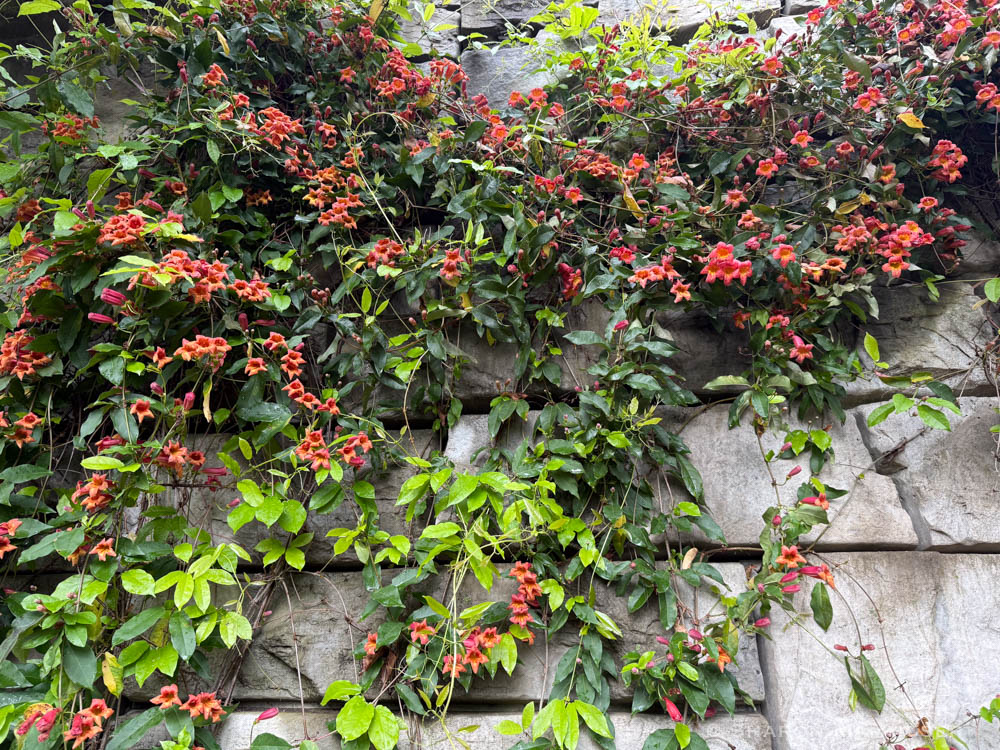
Growth Habit: Clings to most any surface thanks to its twining tendrils that end in adhesive disks.
Light requirements: Will grow in shade, or full sun, blooming more profusely in full sun.
Spacing: 10-15 feet apart
Best uses: This vine is happiest scaling vertical surfaces –walls, poles, posts, or trees – up to 50 feet (15 m.). It uses claw-tipped tendrils to grab on as it moves upwards. Or, you could use it to stabilize a slope.
Notes: In the wild, crosssvine is found climbing trees in swampy forests and woodlands. Because it blooms early, it provides an important food source for hummingbirds when little else is blooming. NC Extension says, “This plant has an extreme flammability rating and should not be planted within the defensible space of your home. “
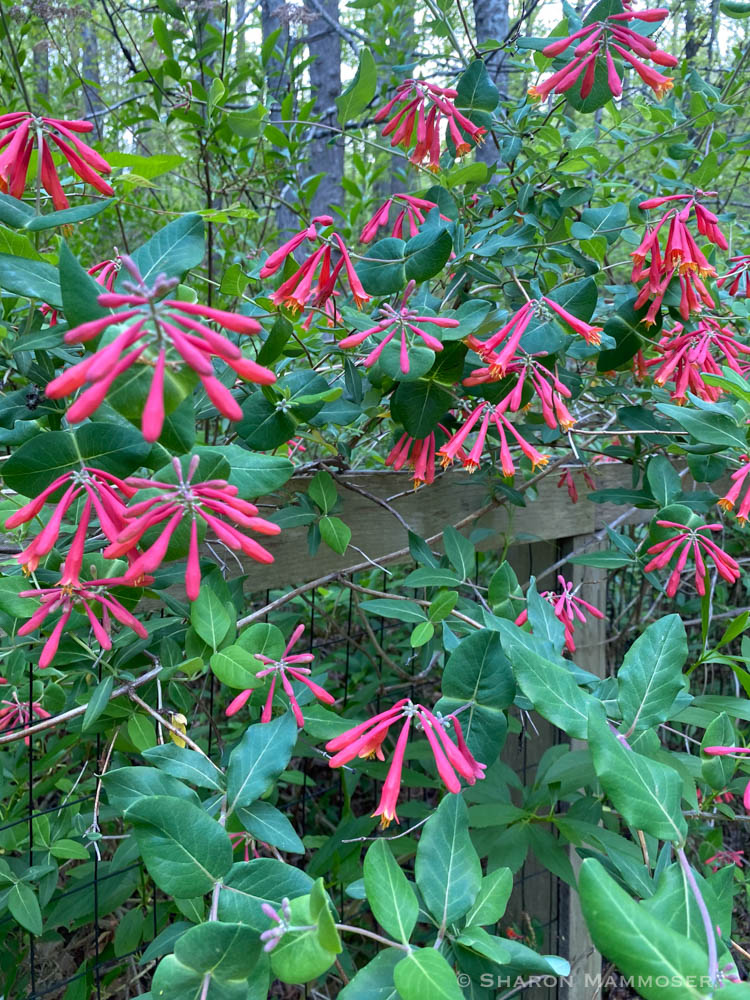
3.Trumpet Honeysuckle, also called coral honeysuckle (Lonicera Sempervirens) This vine is a show stopper that blooms all summer! Its red tubular flowers are a magnet for hummingbirds and bees, it has red berries the birds eat in the fall, and it’s easy to grow.
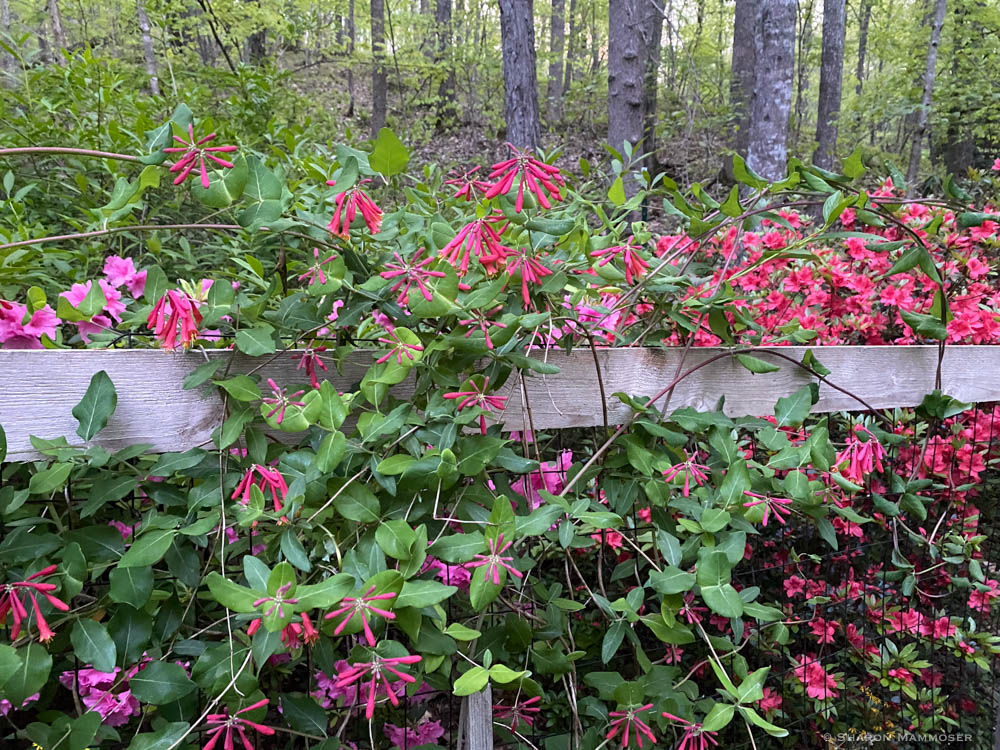
Growth Habit: Trumpet honeysuckle has a twining growth habit.
Light requirements: Best in full sun, but will also grow in part sun
Spacing: 5-10 feet apart
Best uses: Put it on a fence, arbor or trellis, and let it go! It will cover the fence in no time and draw in hummingbirds from all around, plus add lots of bright red to the landscape.
Notes: Trumpet honeysuckle is a larval host for the spring azure butterfly, snowberry clearwing moth, and hummingbird clearwing moth. The red berries that mature in the fall are eaten by songbirds. According to the NC Extension, “This plant has an extreme flammability rating and should not be planted within the defensible space of your home.”
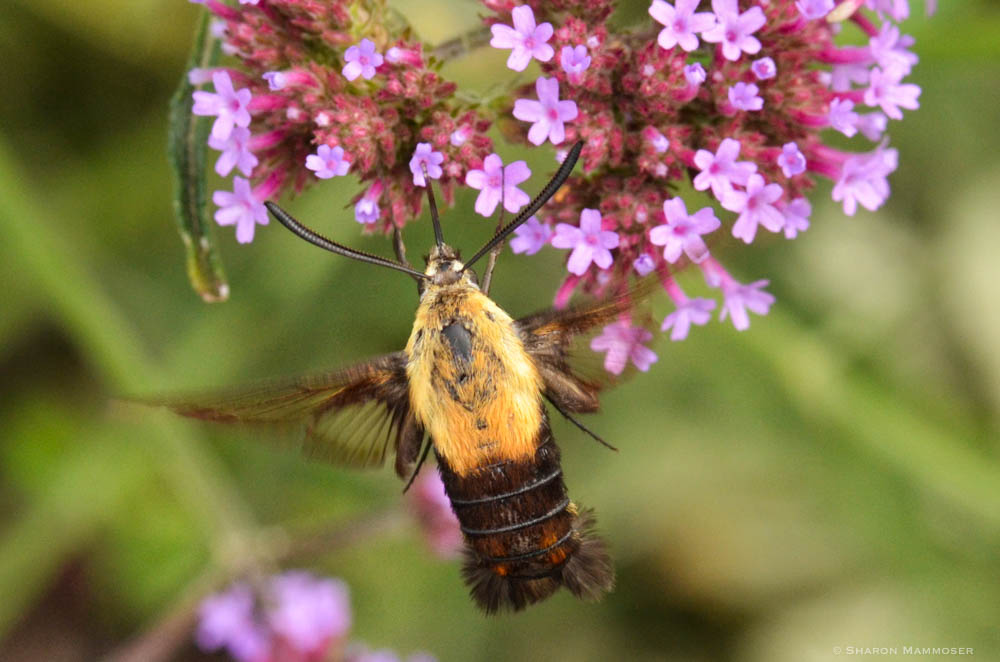
4. Dutchman’s Pipevine (Aristolochia macrophylla) This twining vine has gorgeous heart-shaped leaves (in the same family as wild ginger) and is an important host plant for the pipevine swallowtail caterpillar. It can transform your garden space into a wooded retreat. Pipevine plants contain chemicals that make them poisonous so both pipevine caterpillars and adult butterflies so are distasteful to birds and other predators. Our other dark blue butterflies mimic the pipevine swallowtail to gain protection from predators.
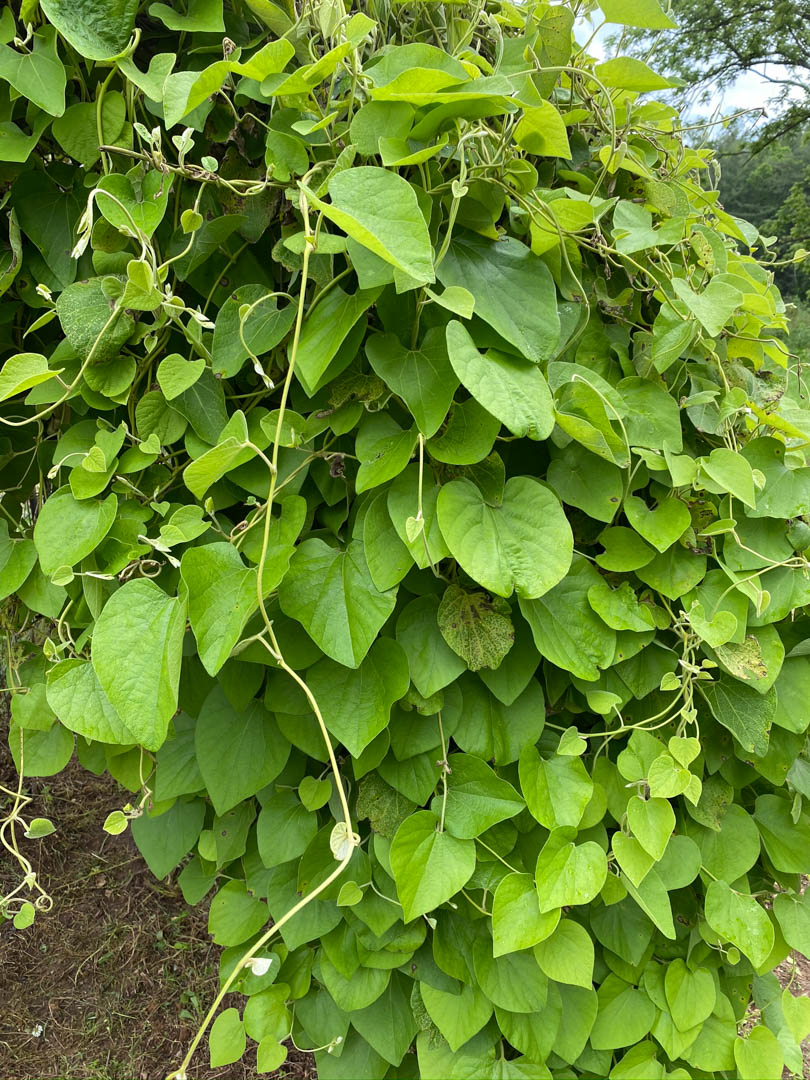
Growth Habit: New growth twines in a clockwise direction.
Light requirements: Full or part sun, shade, depending on the species.
Spacing: 5- 10 feet apart
Best uses: Can provide dense cover for sun porches, verandas, pillars, posts, trellises, arbors, fences or walls. Has been popularly used for many years to screen front porches. It’s a good selection for a butterfly garden. It can also be planted on a fence as a privacy screen.
Notes: This vine gets its name from its unique–but inconspicuous flowers, which resemble a pipe. These are usually hidden deep under the giant leaves and smell unpleasant. Be aware that all parts of this plant, from the bark and leaves to the sap and flowers/fruit is highly toxic to humans if ingested. It generally does not become overly aggressive, and responds well to pruning.
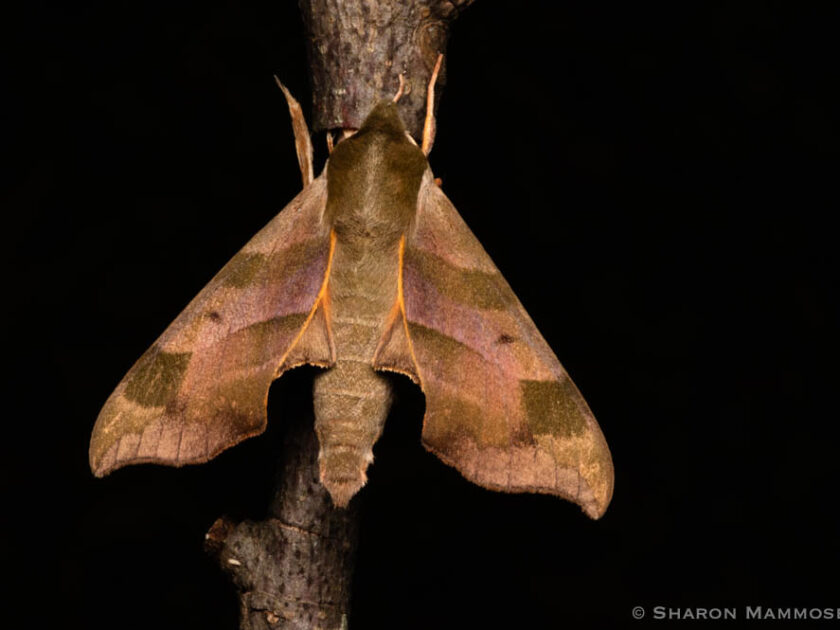
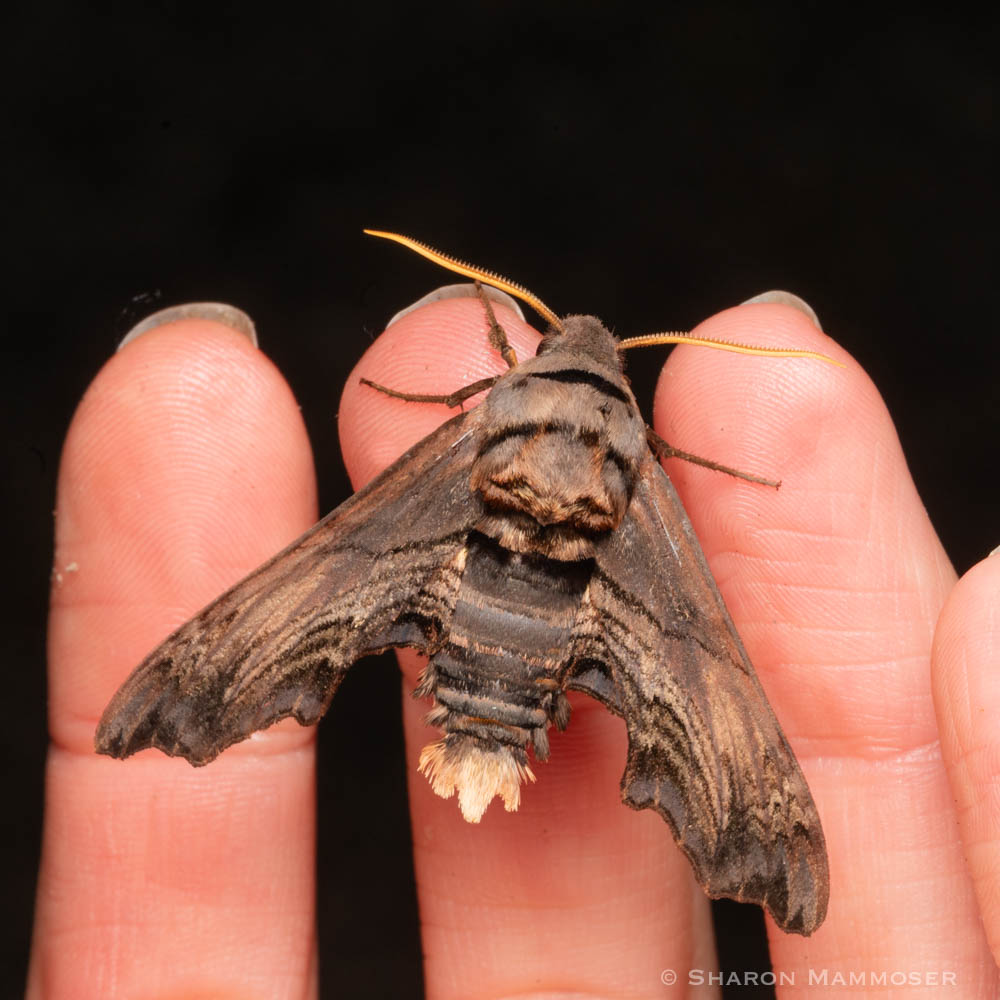
5. Virginia Creeper (Parthenocissus quinquefolia) Native to North America, Virginia creeper is sometimes called the five-leaved ivy, because of its star-like leaflets. Many people confuse this with poison ivy, but Virginia creeper has 5 leaflets, not three (young leaves will have three before becoming five.) Many people consider this a weed, but it is an important native vine with tremendous wildlife appeal. This vine offers brilliant red foliage in the fall, dark blue berries that birds and other animals adore, grows fast, can tolerate full shade, and neglect. In addition, Virginia creeper is a host plant for more than 15 different moths species, including the Abbotts sphinx moth (Sphecodina abbottii), pandora sphinx moth (Eumorpha pandorus), Virginia creeper sphinx moth (Darapsa myron), eight-spotted forester moth, white-lined sphinx moth (Hyles lineata), and nessus sphinx moth (Amphion floridensis). It’s hard to find another native vine with as much wildlife value as Virginia creeper!
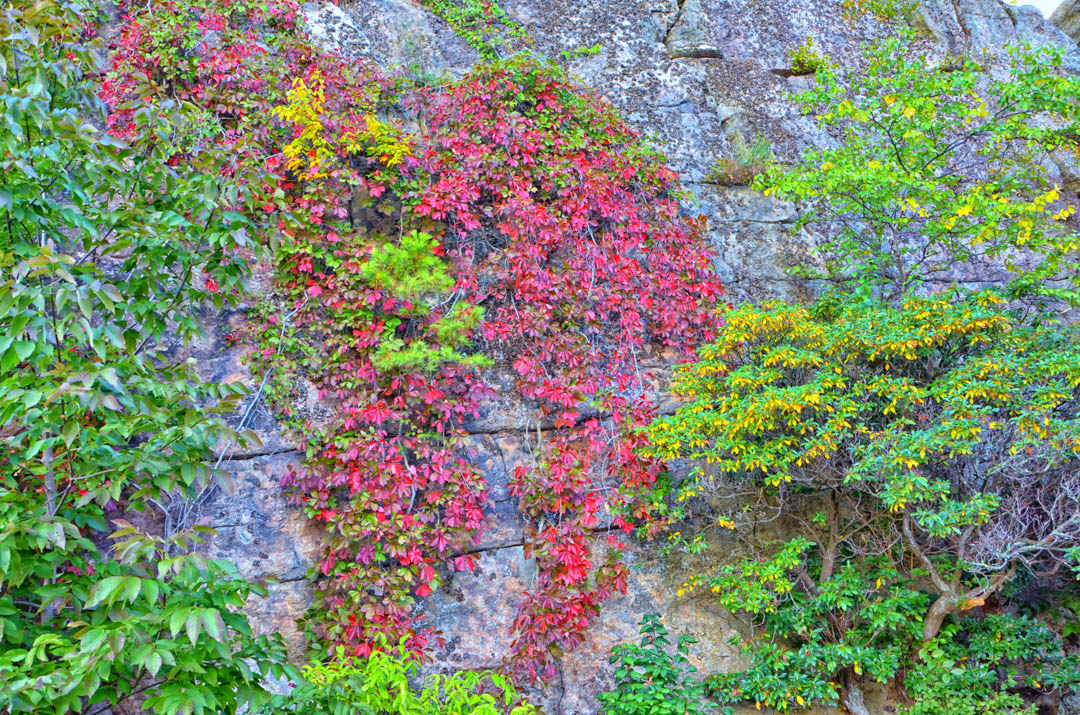
Growth Habit: uses tendrils (slender, curling extensions) that have adhesive-like tips to rapidly attach themselves to structures, rough or smooth. Virginia Creeper is a vigorous tendril climber; however, it is not parasitic and WILL NOT smother its host, or wrap around the tree trunks and strangle them.
Light requirements: Can grow in full shade, but will produce better fall color and more berries in sunny spots.
Best uses: Put it on a fence, trellis, arch, pergola, or arbor and let it go! This vine does not need much in the way of tender loving care– it does fine on benign neglect. Virginia creeper grows fast and can do fine in full shade. If it has nothing to crawl up, it will spread on the ground and can make a great shady ground cover.
Notes: It is not the best vine for buildings as the sucker discs can cause damage. Many people consider this a weed and do all they can to eliminate it, but the wildlife value is so great that it’s worth putting in the yard or garden. Might not be the best though for small spaces. It will be hard to find at nurseries– you can plant it from seed, but the seed must go through stratification–this means it has to go through a cold period (winter) in order to germinate.
Thanks for adding habitat to your yard by way of native vines. The caterpillars, birds, moths, butterflies, and other wildlife thank you!
No wonder this article took so long to write. So inclusive
Thanks. Yes, I tried to cover it all. Thanks for reading.
I would love to find and photograph hummingbirds in the wild, but times and places where I’ve seen them there are so rare and of short duration. I’m afraid my interest in domestic plants has lagged because I have no place I own where I can plant flowering plants to attract hummingbirds and other wildlife. And there is not enough time allowed when part of a birding party for an adequate opportunity for photography. I used to go on solo photo excursions, but now I have no vehicle capable of carrying a canoe.
I love to photograph along streams (ancient rivers) and wetlands, particularly in beaver country, and I hope to find a portable, collapsible canoe or substitute (I can’t paddle a kayak or row a boat due to congenital disability), like something innovative with an outrigger since nothing beats photography on the water. Have you heard of anything like that in North Carolina? My favourite wildflower is the Venus Flytrap. I hope they are still abundant.
Murray, Thanks for writing. I hope you will be able to find a way to get outside again. I don’t know about a collapsible boat but I wish you luck in finding some solution that allows you to do the things you once enjoyed. I have never seen a Venus flytrap in person, only in photos… one of these days I’ll be where I can see one! Maybe there is a local outing club or conservation or birding club where you live that you could join? Perhaps someone would be willing to pick you up so you could go on excursions with them?