

As you hike or drive around, you’ve probably seen those white, silken tents in many trees. They are super easy to spot, especially since the forest has not fully leafed out yet and they aren’t camouflaged by leaves. Most of us know these are from some kind of caterpillar, but that might be the end of our knowledge about this seasonal phenomenon. If you have these tents in trees in your yard, do you need to be panicking or running to the store for some kind of pesticide?
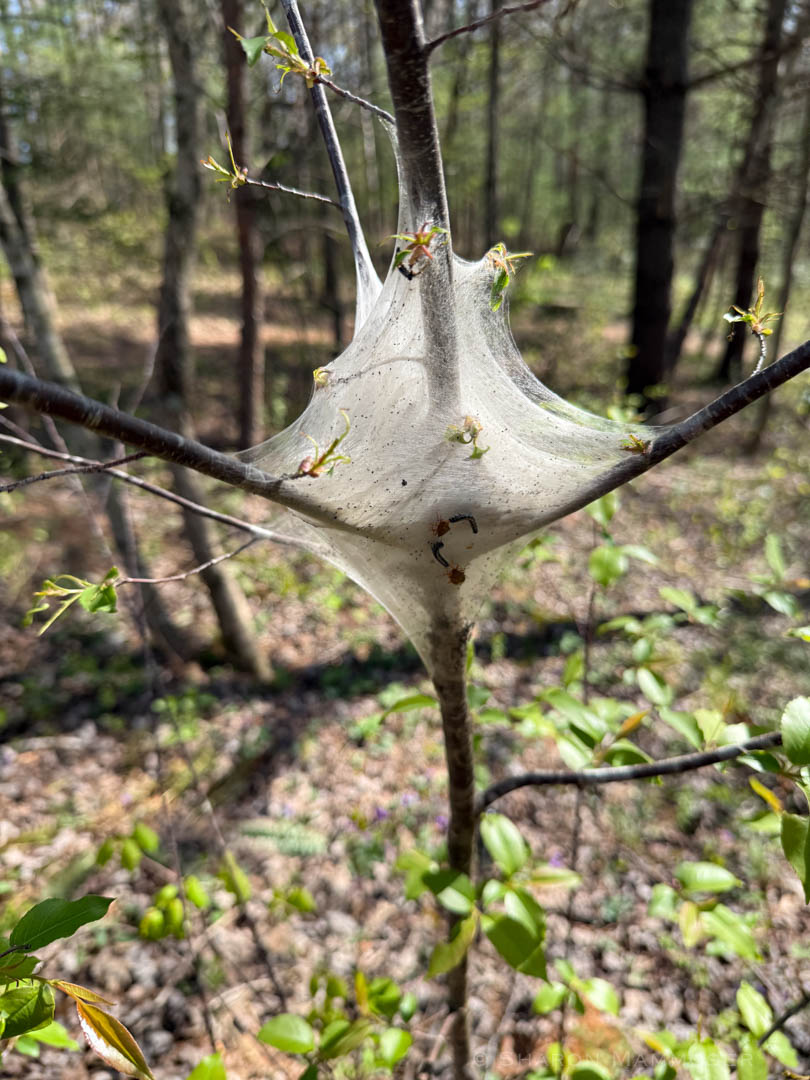
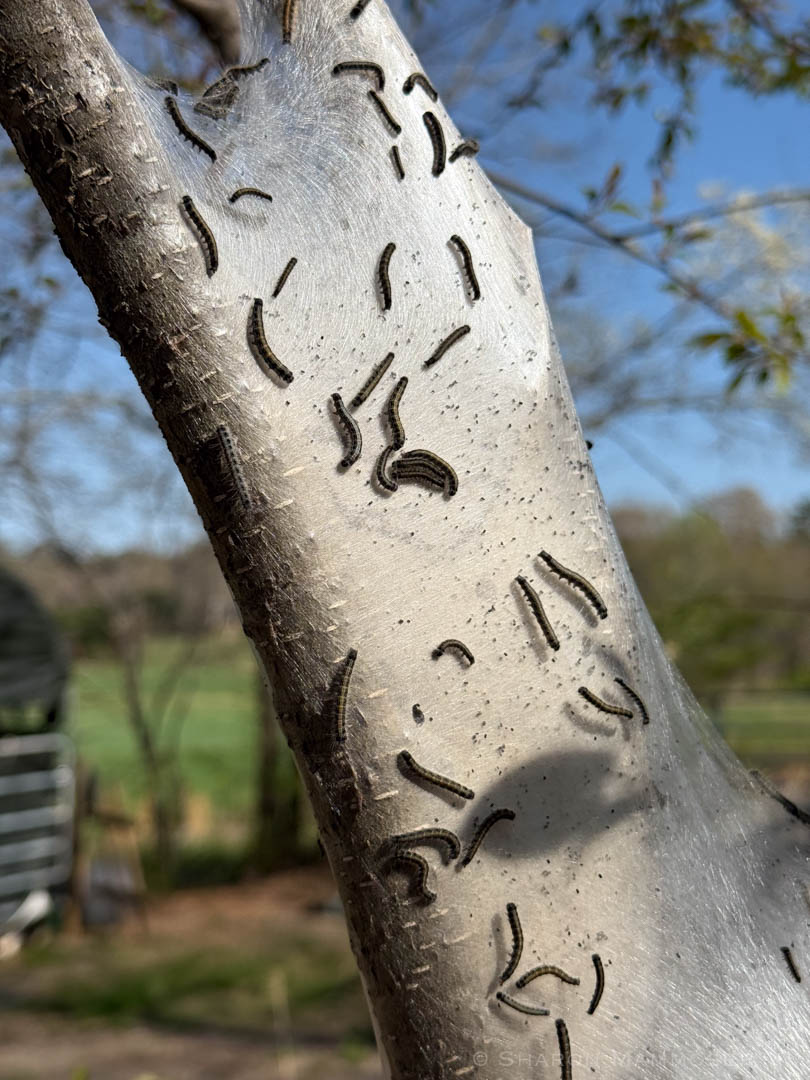
Here’s what you need to know about these tent caterpillars. They are made by eastern tent caterpillars, which are a native species to eastern North America. Their white nests are always in a crotch or fork of trees– never on the ends, and not in the fall. Those are made by another species of caterpillar– the fall webworm. Unlike many other species of caterpillars that have multiple generations per summer, the eastern tent caterpillar has only ONE. The eggs have been there all winter, and now, in early spring, the tiny caterpillars hatch out and begin feeding. Each egg mass has between 150-350 caterpillars. They are particularly fond of cherry, crabapple, apple, plum and chokecherry leaves. They will exit the tent to feed, leaving a trail of silk to help them find their way back. They return to the tent at night for safety from predators, although some birds are onto the game and dig into the tent to snag lots of tasty treats all at once.
In general, these caterpillars and their very obvious tents do not affect tree health. Most mature, established trees will recover from the voracious feeders munching on their fresh green leaves, able to produce another set of leaves to replace those that were eaten. According to Penn State Extension, “The caterpillars are a native species that are attacked by a plethora of natural enemies, including birds and various insect predators and parasitoids. So outbreaks are periodic and short-lived and damage is generally considered aesthetic rather than a health threat to most trees.”
Mature caterpillars are about two inches long with a white stripe down the center of their back, with yellow stripes on either side. The rest of the body is mottled blue, yellow, and black. Old folklore might suggest that these hairy caterpillars are avoided by birds, but current research has shown otherwise. These caterpillars are eaten by over 60 different species of birds, including blue jays, chickadees and nuthatches. (While these caterpillars are not poisonous, they do have guard hairs that are irritants to the stomach lining of many animals including horses. Thus, don’t let your dog, horse or child eat them!)
You can watch them in a cherry tree here!
We could all learn a thing or two from these hairy invertebrates, including how to work together. Caterpillars from nearby eggs, related or not, will work together to create their silken nest, laying down layer after layer of silk. They can often be seen sunning themselves together on cool days. And their tent? Talk about sturdy!! The tents withstand crazy-strong winds, rains, even hail and snow. Then, best of all, they biodegrade when the caterpillars have finished using them.
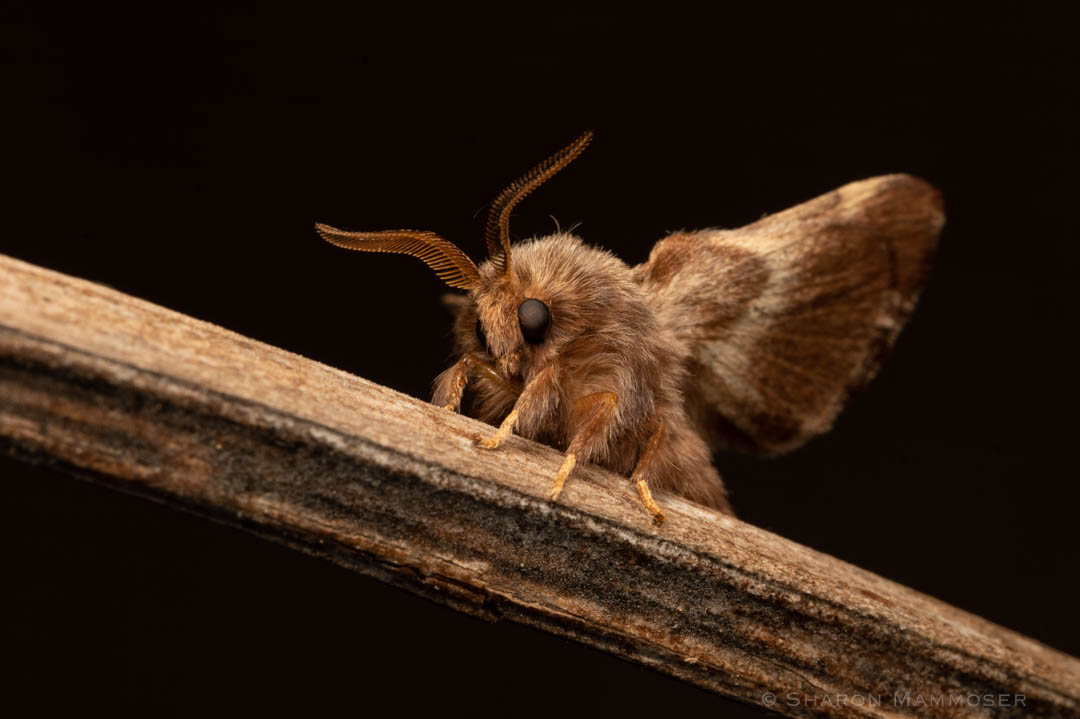
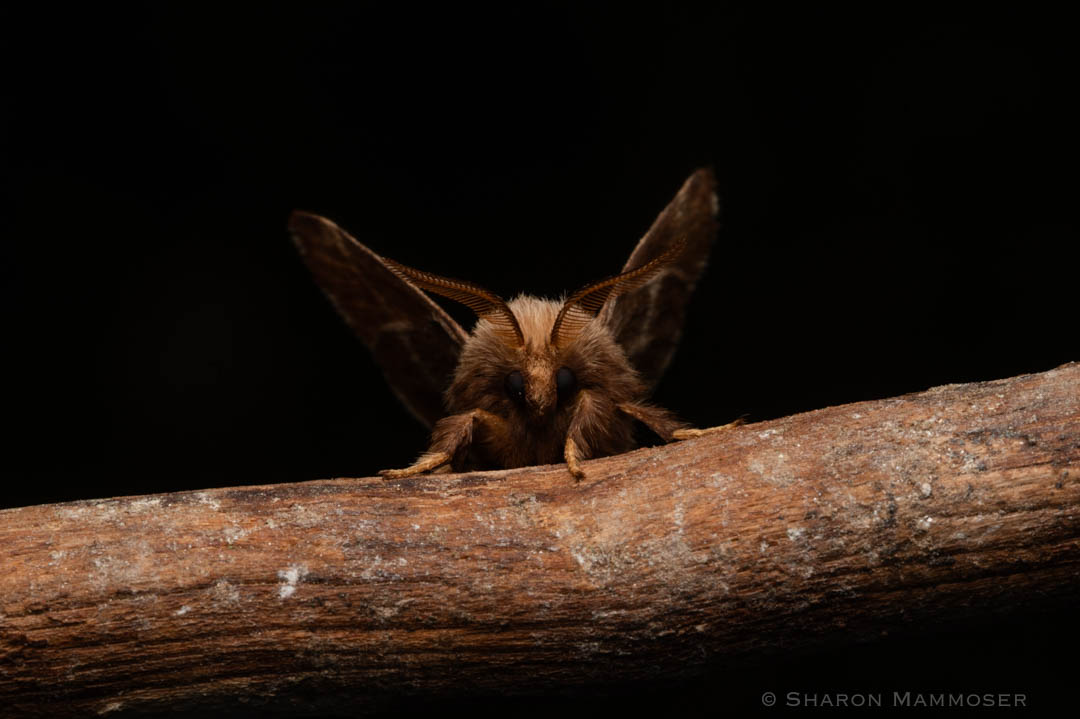
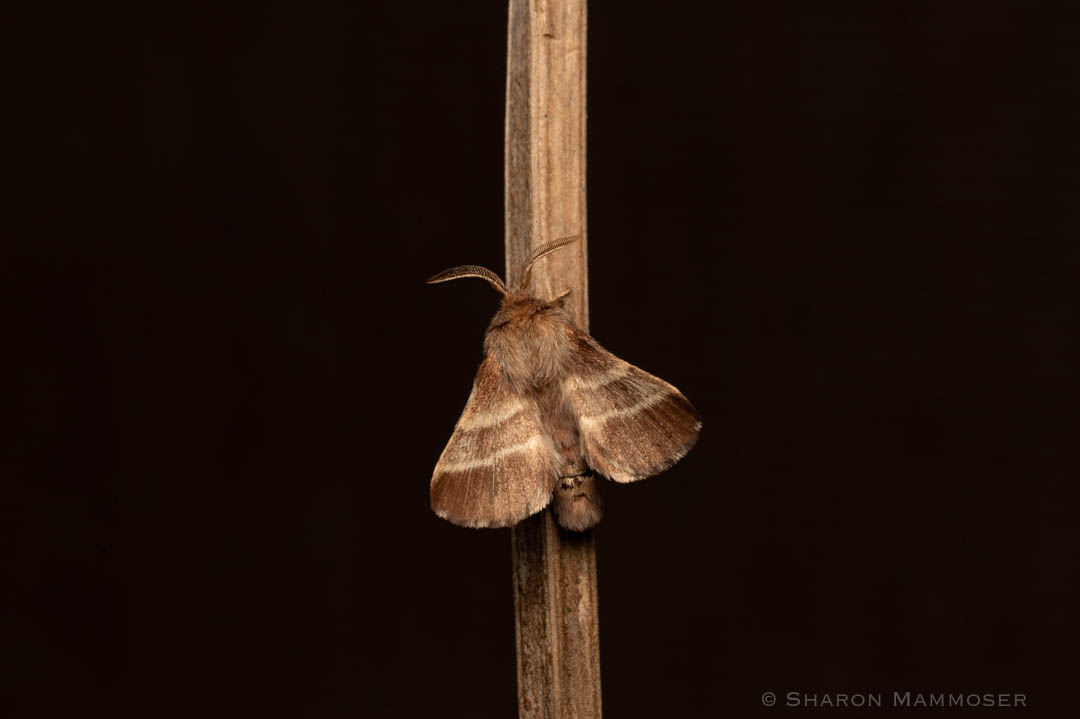
After they’ve eaten and grown all they can, the caterpillars fall to the forest floor and pupate into moths, which if you ask me, are super cute. I especially love their feathery antennae and soft brown wings. I see them frequently at my mothing stations later in the summer.
Will you help me normalize imperfection in our yards? Unless these tents are in young trees you just planted, there is no need to intervene and kill them. Instead, let them feed the birds and other animals. Let’s step away from the pesticides/herbicides, and other harmful chemicals and just let them be.
Want to learn more about moths? Here are some things that might just blow your mind!
Thanks Sharon. I always wondered about those white nests in the trees.
Now I know and won’t worry or wonder about them any longer.
Glad it was helpful, Helen. Thanks for reading and taking time to comment. I hope you’re having a lovely weekend!!